

Why the Best SEO Content Optimizer in 2026 Goes Far Beyond Keyword Density
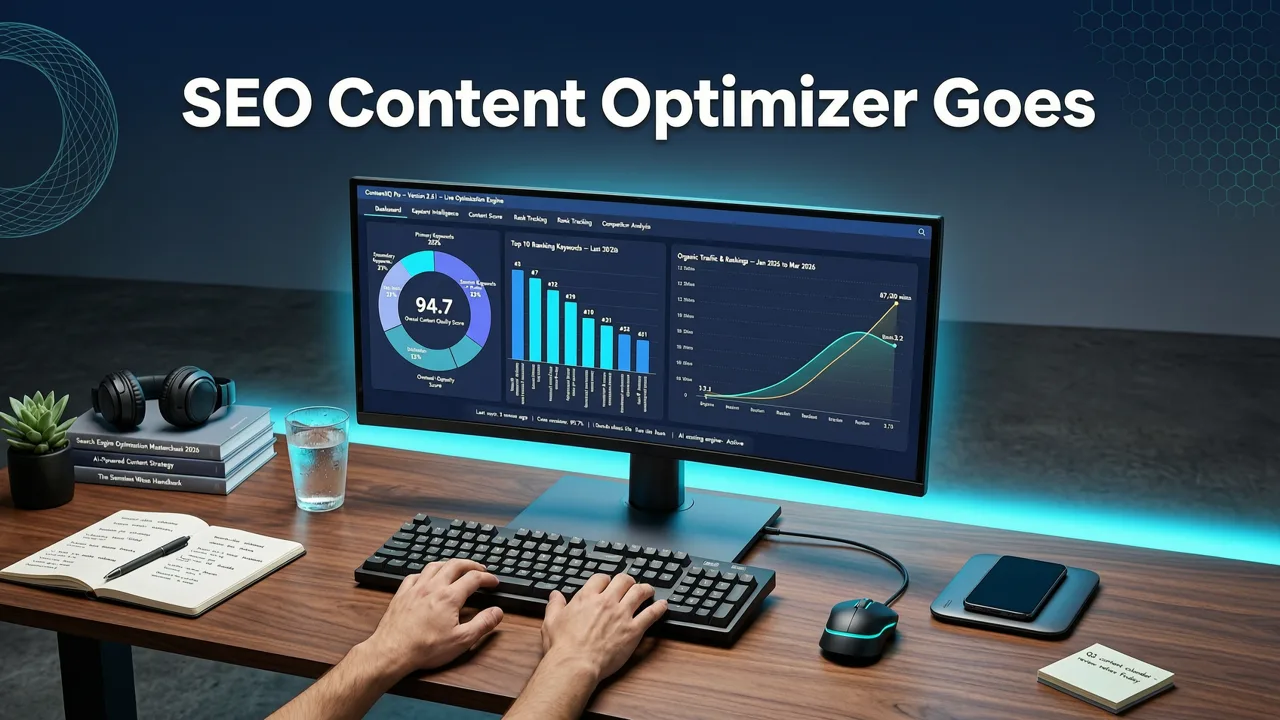
If you are evaluating the best SEO content optimizer in 2026, you already know that stuffing keywords into headings no longer moves rankings. The strongest tools now combine intent modeling, entity coverage analysis, real-time SERP data, and editorial workflow automation in a single interface. The right optimizer does not just grade your draft — it shapes the entire content production pipeline.
In this guide, we break down the tools that genuinely earn the title of best SEO content optimizer in 2026, explain what separates them from outdated on-page checklists, and show you how to match each platform to your team size, budget, and workflow.
What Actually Defines the Best SEO Content Optimizer in 2026

Search engines in 2026 reward content that answers a query with depth, accuracy, and structural clarity. A modern content optimizer must therefore measure more than word count. It needs to evaluate semantic coverage, topical authority signals, and compliance with evolving rendering requirements such as structured data and accessibility.
Intent-Aware Scoring
The best platforms analyze the dominant intent cluster for a target keyword — informational, transactional, navigational, or hybrid — and adjust their scoring model accordingly. A page optimized for a commercial-intent query should not be penalized for lacking a 2,000-word essay, and an informational piece should not be graded by ecommerce conversion signals.
Entity and Semantic Coverage
Google's knowledge graph has expanded dramatically. Top-tier optimizers now map the entities, attributes, and relationships your content should reference to satisfy the knowledge panel and passage-ranking layers. This means going beyond synonym lists and instead modeling the conceptual field around your topic.
Real-Time SERP and Competitor Intelligence
Static briefs are obsolete. The best SEO content optimizer pulls live SERP data, identifies content gaps among the current top ten, and surfaces structural patterns such as FAQ density, table usage, and schema adoption rates. This keeps your brief aligned with what is actually ranking today, not six months ago.
Editorial Workflow Integration
Writers, editors, and SEOs rarely work inside the same tool. The strongest platforms integrate with Google Docs, WordPress, Notion, and headless CMS environments, pushing optimization signals directly into the drafting surface rather than forcing users to toggle between tabs.
How to Compare SEO Content Optimizer Tools
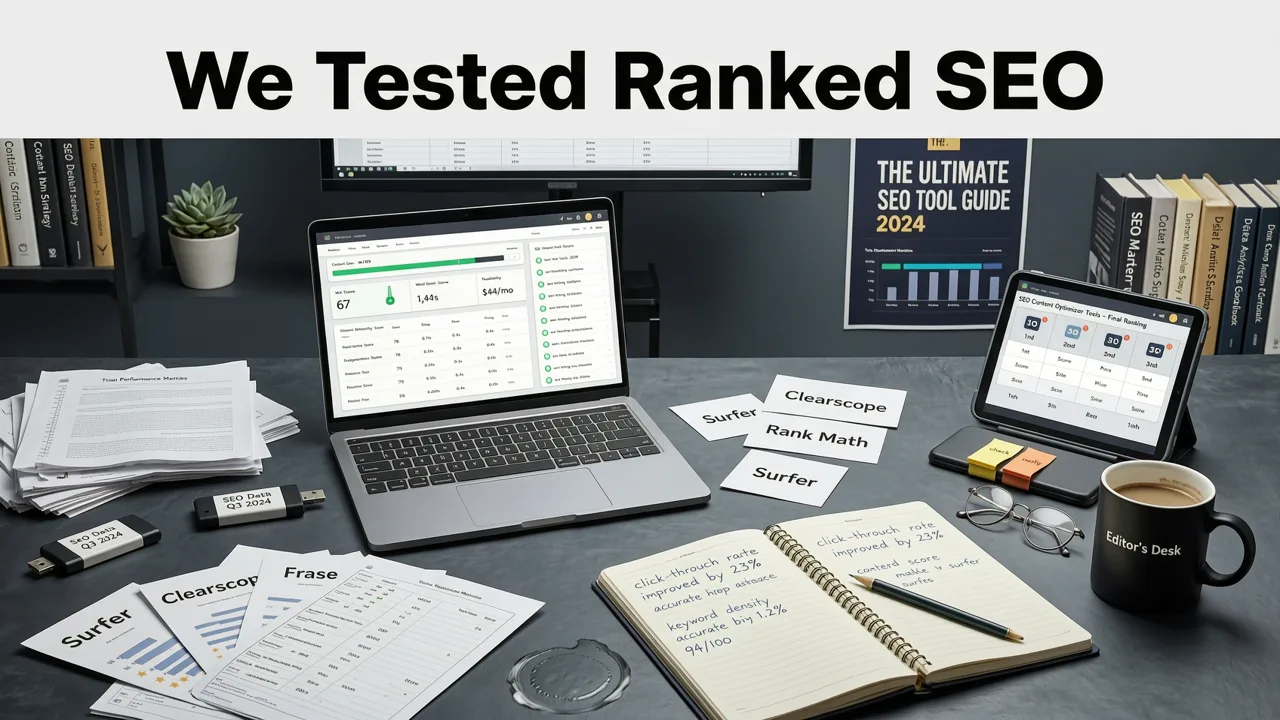
Weigh each platform on these six criteria:
- Scoring accuracy — how well the tool’s recommendations line up with the pages that already rank for your keywords.
- Brief quality — depth, specificity, and actionability of AI-generated content briefs.
- Entity modeling — coverage of related concepts, attributes, and co-occurring terms.
- Workflow fit — integrations with popular editors, CMS platforms, and project management tools.
- AI writing assistance — usefulness of inline suggestions without producing generic filler.
- Pricing transparency — clarity of seat, credit, and API costs at scale.
For teams also evaluating broader tool stacks, our breakdown of the best SEO tools for startups covers how optimizers pair with rank tracking and technical audit platforms.
The 7 Best SEO Content Optimizer Tools in 2026
1. Surfer SEO — Best All-Around Content Optimizer for Scaling Teams
Surfer remains the default choice for agencies and in-house teams that need a balance of depth, speed, and affordability. Its Content Editor delivers a real-time scoring model that weighs term frequency, heading structure, paragraph length, image usage, and internal linking density. In 2026, Surfer added an entity graph layer that highlights missing concepts rather than just missing keywords.
Strengths: intuitive editor, strong Google Docs integration, competitive pricing for multi-seat teams, and an audit feature for refreshing existing content.
Limitations: brief generation is solid but less customizable than enterprise alternatives; schema suggestions are limited compared to dedicated technical SEO platforms.
Best for: content teams producing 20 to 200 articles per month who want a single optimizer that handles briefs, writing, and post-publish audits.
2. MarketMuse — Best for Topical Authority and Enterprise Content Strategy
MarketMuse approaches optimization from a site-wide perspective. Instead of scoring a single page in isolation, it maps your entire domain against a topic cluster and identifies authority gaps. Its automated briefs are among the most detailed available, referencing specific subtopics, question formats, and supporting entities drawn from live SERP analysis.
Strengths: unmatched topical authority modeling, AI briefs that reduce editorial research time by roughly half, and a content inventory feature that flags cannibalization and thin pages.
Limitations: higher price point; the interface has a steeper learning curve for writers unfamiliar with topic-model concepts.
Best for: enterprise publishers and agencies managing large content estates where topical coverage matters more than individual page tweaks.
3. Frase — Best for Research-Heavy Briefs and AI-Assisted Drafting
Frase combines SERP research, outline generation, and AI writing into a streamlined workflow. Its optimizer scores drafts against the top-ranking pages for your target query and highlights gaps in question coverage, statistic usage, and structural elements such as tables and comparison lists.
Strengths: fast brief creation, strong AI paraphrasing that respects brand tone when configured, and a built-in outline builder that mirrors competitor structures.
Limitations: entity modeling is less sophisticated than MarketMuse; real-time SERP refresh can lag by several hours on highly volatile queries.
Best for: small teams and freelancers who need a research-to-draft pipeline in one tool. If you are also exploring generative options, our guide to the best AI SEO content generators in 2026 compares Frase's writing module against standalone generators.
4. Clearscope — Best for Precision Scoring and Editorial Collaboration
Clearscope is known for its rigorous scoring methodology, which correlates strongly with ranking performance on competitive terms. The platform emphasizes term relevance, readability, and semantic coverage without encouraging over-optimization. Its collaboration features allow editors to leave contextual comments tied directly to optimization suggestions.
Strengths: highly accurate scoring, clean interface, excellent for high-stakes cornerstone content, and strong integration with Google Docs and WordPress.
Limitations: pricing is premium; brief generation is manual rather than fully automated.
Best for: publishers focused on quality over volume, particularly in YMYLL niches where accuracy and depth are non-negotiable.
5. NeuronWriter — Best Budget-Friendly Optimizer with NLP Insights
NeuronWriter uses NLP-based analysis to recommend terms and concepts based on their co-occurrence patterns in top-ranking pages. It offers a generous feature set at a lower price point than most competitors, including competitor analysis, content planning, and a simple scoring dashboard.
Strengths: affordable, solid NLP recommendations, includes a content planner that maps internal linking opportunities.
Limitations: interface feels dated; AI writing assistance is basic compared to Frase or Surfer.
Best for: solo marketers and small teams who want NLP-driven optimization without enterprise pricing.
6. PageOptimizer Pro (POP) — Best for Data-Driven On-Page Tweaks
PageOptimizer Pro, built by Kyle Roof, takes a statistical approach to on-page SEO. It compares your page against top-ranking competitors and tells you exactly where your term counts, heading usage, and structural elements deviate from the ranking average. It is less of a writing assistant and more of a surgical optimization tool.
Strengths: extremely precise recommendations, strong correlation with ranking improvements on technical SEO tests, and a no-nonsense interface.
Limitations: no AI writing or brief generation; not ideal for teams that need end-to-end content production support.
Best for: technical SEOs and data-driven marketers who want to fine-tune existing pages with mathematical confidence. For a broader view of on-page tooling, our review of the best AI tools for on-page SEO covers how POP complements schema and technical automation layers.
7. Dashword — Best for Content Monitoring and Brief Handoff
Dashword focuses on the post-publish phase as much as the pre-publish phase. It generates briefs, provides a content score, and then tracks how that score correlates with ranking movement over time. Its "content monitoring" feature alerts you when a page's optimization falls behind competitors.
Strengths: strong brief handoff workflow, useful monitoring dashboard, and a simple pricing model based on content credits.
Limitations: scoring model is less granular than Clearscope or Surfer; entity coverage recommendations are surface-level.
Best for: agencies that manage client content at scale and need a lightweight tool for briefs and performance tracking.
Feature Comparison: Best SEO Content Optimizer Tools at a Glance
The table below summarizes how each platform performs across the criteria that matter most in 2026.
| Tool | Best For | AI Briefs | Entity Modeling | CMS Integration | Starting Price (Monthly) |
|---|---|---|---|---|---|
| Surfer SEO | Scaling content teams | Strong | Good | Google Docs, WordPress | $89 |
| MarketMuse | Enterprise topical authority | Excellent | Excellent | Google Docs, WordPress, CMS APIs | $149 |
| Frase | Research-to-draft workflow | Strong | Moderate | Google Docs, WordPress | $15 |
| Clearscope | Precision editorial scoring | Manual | Good | Google Docs, WordPress | $170 |
| NeuronWriter | Budget NLP optimization | Basic | Moderate | WordPress | $23 |
| PageOptimizer Pro | Statistical on-page tuning | None | None | WordPress, CSV export | $49 |
| Dashword | Brief handoff and monitoring | Strong | Basic | Google Docs, WordPress | $99 |
How to Choose the Right SEO Content Optimizer for Your Team
Selecting the best SEO content optimizer is less about finding the highest-scoring tool in isolation and more about matching the platform to your production model. Consider the following decision factors.
Content Volume and Team Structure
If your team publishes more than 50 pieces per month, prioritize tools with strong brief automation and multi-seat collaboration — Surfer, MarketMuse, and Dashword lead here. Solo operators and freelancers may find Frase or NeuronWriter offer better value per article.
Niche Complexity
YMYLL and technical niches benefit from tools that emphasize accuracy and depth, such as Clearscope and MarketMuse. Lifestyle and ecommerce niches often see faster wins from Surfer's structural recommendations and Frase's question-coverage analysis.
Existing Workflow and Tech Stack
Before committing, map the optimizer against your current CMS, editorial calendar, and AI writing tools. An optimizer that forces your writers into a proprietary editor will see lower adoption than one that plugs directly into Google Docs or WordPress.
Budget and Scaling Costs
Pay attention to how pricing scales with seats and content credits. Some tools appear affordable at the entry tier but become expensive once you add editors, API access, and historical content audits.
Common Mistakes When Using an SEO Content Optimizer
Even the best SEO content optimizer will underperform if your team falls into predictable traps.
- Chasing a perfect score. A 100 out of 100 content score does not guarantee a top-three ranking. Use the score as a directional signal, not a publishing gate.
- Ignoring search intent. If the SERP rewards product comparison pages and your brief is structured as a long-form guide, no amount of term optimization will fix the mismatch.
- Over-optimizing at the expense of readability. Stuffing recommended terms into unnatural sentences hurts user engagement metrics, which in 2026 carry more weight than ever.
- Neglecting technical foundations. Optimization tools assume your page loads quickly, renders correctly on mobile, and has clean structured data. Without that foundation, on-page scores are largely theoretical. Refer to the Google Search Central documentation for current rendering and indexing requirements.
- Skipping post-publish monitoring. Rankings shift. Set a quarterly review cycle to refresh scores, update entities, and re-run competitor gap analysis.
The Role of Structured Data in Content Optimization
In 2026, structured data is no longer optional for competitive topics. The best optimizers either suggest schema markup directly or integrate with technical SEO platforms that handle it. Article, FAQ, HowTo, and Product schema all influence how your content appears in rich results and AI-generated overviews.
When evaluating a content optimizer, ask whether it flags missing schema opportunities and whether it validates markup against the Schema.org reference. Tools that ignore this layer leave measurable visibility on the table.
How AI Is Reshaping Content Optimization in 2026
AI has shifted from a novelty to an operational requirement. The most effective optimizers now use large language models not just to draft text, but to simulate how a search engine might interpret your content's topical coverage. This includes predicting which entities a passage should reference, which questions it should answer, and which structural formats it should adopt.
However, AI-generated suggestions still require human editorial judgment. The best results come from teams that treat AI as a research and structuring assistant, not a replacement for subject-matter expertise.
Frequently Asked Questions
What is the best SEO content optimizer for small teams?
Frase and NeuronWriter offer the strongest value for small teams. Frase provides a complete research-to-draft workflow at a low entry price, while NeuronWriter delivers NLP-based optimization recommendations without enterprise costs.
Do SEO content optimizers actually improve rankings?
When used correctly, yes. Optimizers help you align content with search intent, cover relevant entities, and match the structural patterns of top-ranking pages. However, they are one component of a broader strategy that includes technical SEO, link building, and user experience.
Can I use a content optimizer for existing pages?
Absolutely. Most tools include a content audit or refresh feature that re-scores live pages, identifies gaps compared to current competitors, and suggests targeted updates. This is often the fastest way to recover lost rankings.
How often should I re-optimize content?
For competitive topics, quarterly reviews are a practical minimum. For evergreen or low-competition content, a semi-annual refresh is usually sufficient. Monitor your rankings and SERP changes to determine the right cadence for your niche.
Should I combine a content optimizer with an AI writer?
Yes. The most productive workflows in 2026 pair an optimizer like Surfer or MarketMuse with a dedicated AI content generator. The optimizer defines the strategy and scoring model, while the AI writer accelerates drafting within those parameters.
Final Thoughts: Picking Your Best SEO Content Optimizer
The best SEO content optimizer in 2026 is the one that fits your team's volume, niche complexity, and existing workflow while delivering recommendations that correlate with real ranking movement. Surfer leads for scaling teams, MarketMuse dominates enterprise topical strategy, Frase wins on research-to-draft speed, Clearscope excels in editorial precision, and PageOptimizer Pro remains the go-to for statistical on-page tuning.
Whichever tool you choose, remember that optimization is only as strong as the strategy behind it. Pair your optimizer with solid technical SEO, a clear internal linking plan, and a commitment to refreshing content on a regular cadence. If you need help building that broader strategy, our local SEO strategy guide and on-page tooling reviews can help you connect the dots.
Ready to stop guessing and start ranking with confidence? Audit your current content stack, pick the optimizer that matches your workflow, and run a 30-day test on five priority pages. The data will tell you everything you need to know.


