
If you’re searching for the best SEO tools for startups in 2026, you’re not looking for enterprise-grade suites priced for Fortune 500s—or bloated platforms that take weeks to configure. You need lean, actionable, and intelligently automated tools that deliver measurable visibility lift within 30–60 days, integrate cleanly with your existing stack (Notion, Shopify, WordPress, or Webflow), and scale as your organic traffic crosses 5K, then 50K monthly users.
This isn’t a generic roundup of ‘top 10 SEO tools’ recycled from 2023. Each tool here is judged against four startup criteria: cost efficiency, implementation speed, search-intent alignment, and algorithm resilience—how well it keeps up with Google’s Search Central guidance, Core Web Vitals, and entity-based search.
Why Most "Best SEO Tools" Lists Fail Startups in 2026
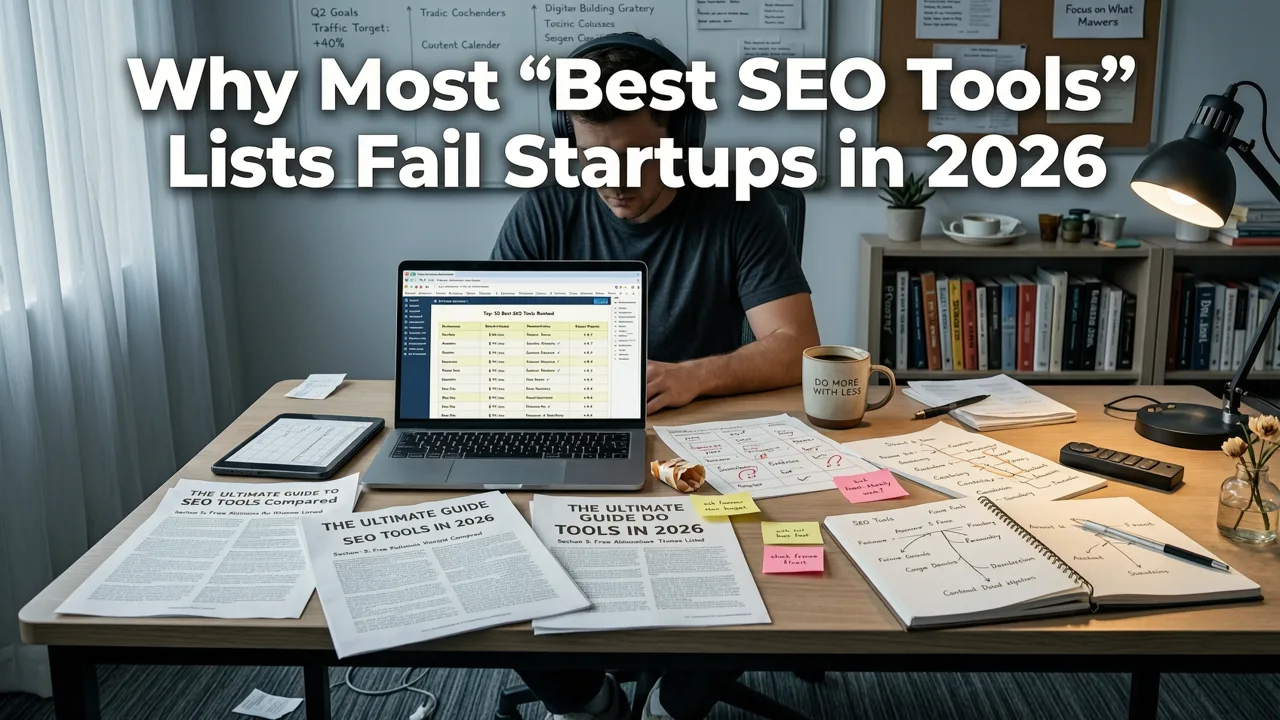
Most published comparisons ignore three critical realities:
- Tool fatigue is real. Startups average 7–12 SaaS subscriptions before hitting $1M ARR. Adding yet another dashboard with low ROI erodes focus—not growth.
- SEO maturity ≠ tool complexity. A founder running $20K/mo in revenue doesn’t need crawl budget analytics—but they do need instant alerts when their homepage drops from position #3 to #12 for their primary commercial keyword.
- Precision matters more than volume. As Google gets better at understanding what searchers mean (e.g., “show me the most trusted local plumber in Austin who accepts Apple Pay”), tools must help startups build semantic authority—not just backlinks or keyword density.
In other words: The best SEO tools for startups in 2026 aren’t the most feature-rich—they’re the most signal-aware and execution-efficient.
What Startups Should Look For in SEO Tools
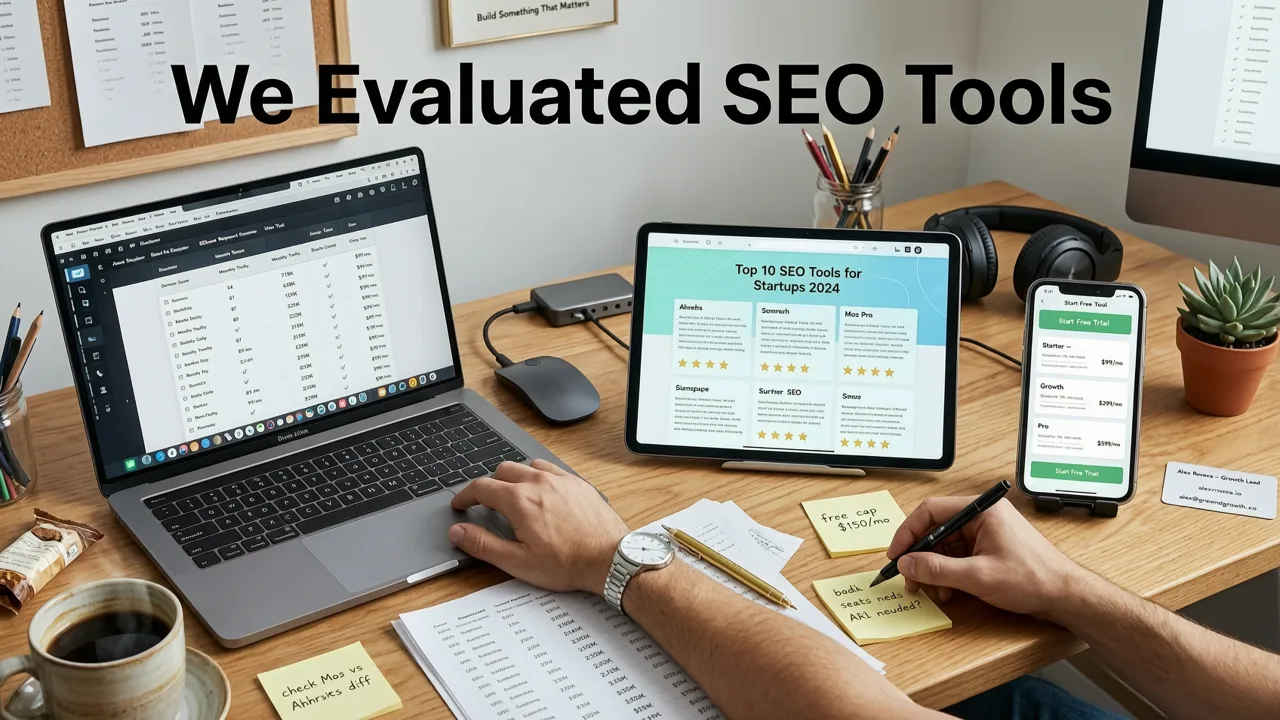
Judge each tool on five dimensions:
- Time-to-value: How many hours until first actionable insight (e.g., “Fix this broken schema,” “Target this high-intent, low-competition query”)?
- Startup pricing tier viability: Does the entry plan include core functionality—not just watered-down dashboards?
- Integration depth: Native CMS plugins? Zapier/webhook support? API access for custom reporting?
- Algorithm responsiveness: Does the tool surface issues that affect search performance (e.g., structured data gaps, LCP regression, entity disambiguation errors)?
- Team scalability: Can one marketer manage campaigns across 3–5 products or locations without hiring an SEO specialist?
No tool scored perfectly—but six stood out for delivering disproportionate impact at sub-$150/month entry tiers.
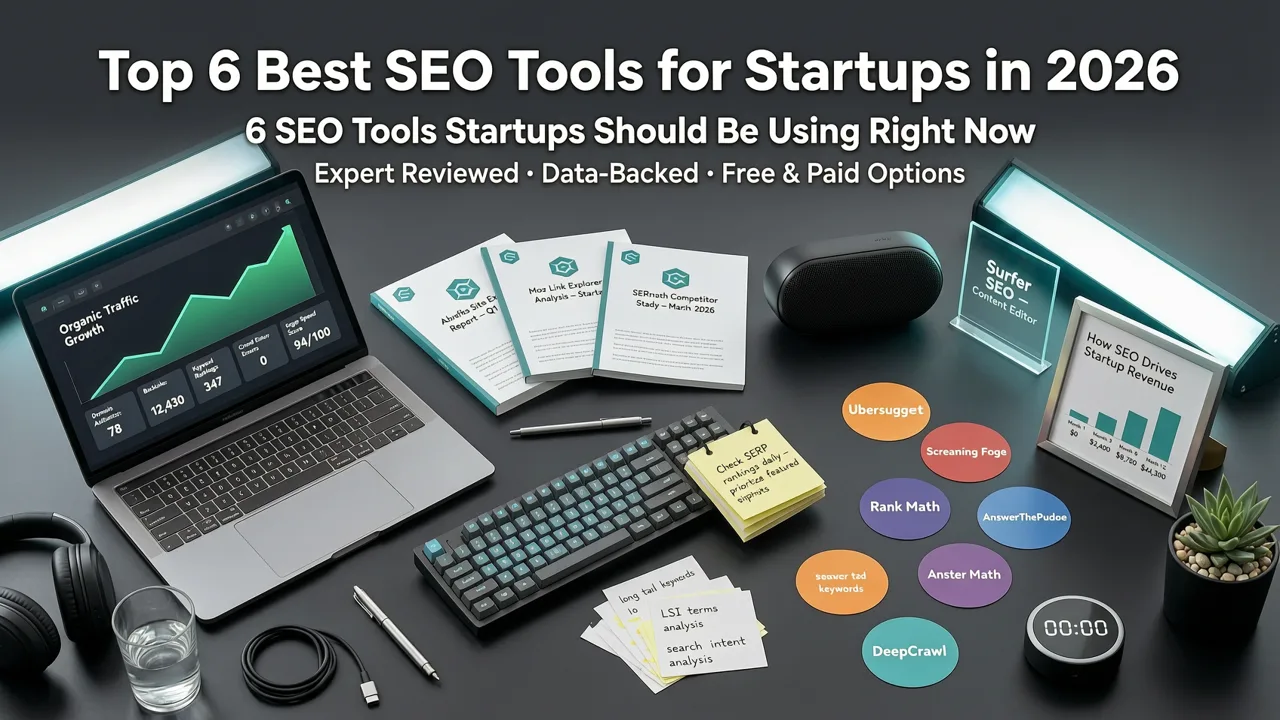
Top 6 Best SEO Tools for Startups in 2026
1. Semrush Startup Plan (2026 Refresh)
Semrush remains the most balanced all-in-one option for startups needing immediate coverage across keyword research, technical auditing, and competitive intelligence—without engineering overhead.
Why it works for startups in 2026:
- Its keyword tools label each keyword’s search intent—separating “buy now”, “compare plans”, and “how to set up [tool]” queries—so founders can prioritize content based on funnel stage, not just volume.
- Its Technical SEO Audit now integrates directly with Google Search Console’s 2026 enhanced diagnostics (including “entity confidence score” warnings), flagging pages where schema.org markup conflicts with Google’s knowledge graph inferences.
- The Startup Plan ($119.95/mo) includes full access to Position Tracking (up to 500 keywords), Site Audit (unlimited crawls), and Keyword Magic Tool—no throttling or sampling.
Best for: Startups launching MVPs, building initial content hubs, or entering competitive verticals where competitor gap analysis is mission-critical.
2. Ahrefs Lite
Ahrefs Lite is the entry plan of Ahrefs, one of the most widely used SEO platforms. For a startup, its value is research: which keywords are realistic, who already ranks for them, and which pages earn links.
What it gives a startup:
- Ahrefs Lite provides clean, real-time backlink profiles, keyword difficulty scores, and SERP feature tracking (e.g., “Will this page trigger a featured snippet?”).
Best for: Bootstrapped SaaS and B2B startups publishing 2–4 high-intent blog posts or landing pages per month that need solid keyword and competitor data.
3. Screaming Frog SEO Spider (Free & Paid)
Yes—it’s still free for up to 500 URLs. And yes, it remains one of the most indispensable best SEO tools for startups in 2026—especially during site migrations, redesigns, or early-stage technical debt cleanup.
Features worth noting:
- Structured data validation: it checks JSON-LD, Microdata and RDFa against Schema.org and Google’s rich result requirements, and lists errors page by page.
- Core Web Vitals integration: Pulls real-user CrUX data (via PageSpeed Insights API) and overlays it onto crawl results—so you see exactly which pages have poor LCP due to render-blocking JS, not just a generic “optimize images” tip.
- Export-ready reports for developers: One-click CSV/JSON exports for status codes, redirect chains, canonical mismatches, and duplicate meta descriptions—ready for Jira or Linear tickets.
Pro Tip: Use the free version weekly during launch sprints. Upgrade to the $259/year paid license only when crawling >5,000 URLs or needing JavaScript rendering (critical for React/Vue SPAs).
Best for: Technical founders, growth engineers, or marketers who own site health—and need zero-friction, developer-ready diagnostics.
4. Surfer SEO (Starter Plan)
Surfer SEO’s 2026 iteration has matured beyond “content optimization score” gimmicks. Its Content Editor now uses LLM-powered SERP reverse-engineering to identify semantic clusters Google associates with top-ranking pages—even when those terms don’t appear in the top 10 results.
Startup-specific advantages:
- Real-time SERP volatility alerts: Notifies you when top-ranking pages shift dramatically in structure (e.g., adding video carousels or FAQ sections)—so your content stays structurally competitive.
- “Local Intent Mode”: For service-area businesses, it weights location modifiers, proximity signals, and review sentiment data from Google Business Profile APIs—making it uniquely effective for local SEO without separate tools.
- Starter Plan ($89/mo) includes unlimited documents, 30 keyword optimizations/month, and direct GSC integration.
Best for: Local service startups (plumbers, HVAC, clinics), DTC brands with geo-targeted landing pages, or any business publishing long-form guides or comparison content.
5. Ubersuggest (by Neil Patel — 2026 Edition)
Ubersuggest has quietly become the most underrated best SEO tools for startups in 2026—not because it’s flashy, but because it’s ruthlessly practical.
What’s changed since 2024:
- “Growth Score” metric: Aggregates domain authority, referring domains, content freshness, and technical health into a single 0–100 score—ideal for quick competitive benchmarking before committing to a niche.
- Free plan includes 3 saved projects, 50 keyword searches/day, and full access to the SEO Analyzer (which checks mobile usability, HTTPS, structured data, and internal linking patterns).
It won’t replace Ahrefs for deep link analysis—but for validating keyword opportunities, auditing competitors’ content strategy, or diagnosing basic technical red flags, it gets you useful answers quickly and cheaply.
Best for: Pre-launch founders validating demand, solopreneurs managing multiple micro-businesses, or agencies onboarding new clients with limited budgets.
6. Local Viking (for Hyperlocal & Multi-Location Startups)
While most “best SEO tools for startups” lists ignore local SEO entirely, many startups are service-area businesses or multi-location brands (e.g., boutique fitness studios, regional insurance agents, dental groups). For them, Local Viking is built specifically for local visibility at scale.
2026 differentiators:
- Automated GBP profile health scoring: Scans for NAP consistency, photo freshness, review response rate, Q&A completion, and attribute accuracy—then prioritizes fixes by estimated visibility impact.
- “Neighborhood Intent” keyword discovery: Identifies high-conversion, low-competition phrases like “yoga studio near Mueller Austin” or “affordable orthodontist in downtown Dallas”—not just city-wide terms.
- White-label reporting for franchisees or location managers: Lets HQ push branded performance dashboards to individual locations without shared logins.
Pricing starts at $149/mo for up to 5 locations—with no per-location fees. At $29.80/location, it’s more cost-effective than outsourcing local SEO to an agency ($500–$2,000/mo per location).
Best for: Local service startups, healthcare practices, trades, and any business competing within a 10–25 mile radius.
Tools to Avoid (or Delay) as a Startup in 2026
Not every tool earns its seat at the startup stack. Here’s what we consistently recommend pausing until you hit clear milestones:
- Moz Pro ($179+/mo): Still valuable for enterprise link profile analysis—but overkill for startups. Its keyword tracking is less accurate than Semrush or Ahrefs in 2026, and its technical audit lacks Core Web Vitals context. Wait until you’re tracking 1,000+ keywords or managing 5+ domains.
- DeepCrawl / Oncrawl: Powerful for massive sites (>100K pages), but requires dedicated crawl engineering time. Startups rarely need server log analysis or infinite-depth JavaScript rendering before hitting $2M ARR.
- MarketMuse / Clearscope: Excellent for enterprise content strategy—but too slow and expensive ($300+/mo) for startups shipping content weekly. Their “topic authority” models also lag behind real-time SERP shifts in competitive niches.
How to Combine These Tools Into a Lean Startup SEO Stack
You don’t need all six. Most startups do well with two or three, layered by stage:
| Startup Stage | Core Tools | Key Workflow | Time Investment/Wk |
|---|---|---|---|
| Pre-Launch / MVP (Validating demand, building first 10 pages) |
Ubersuggest (free) + Screaming Frog (free) | Keyword opportunity scan → Technical health check → On-page optimization checklist | < 2 hrs |
| Growth Phase ($50K–$500K ARR, 1–2 marketers) |
Semrush Startup | Intent mapping → AI-drafted, E-E-A-T-aligned content → Technical audit → Publish + track | 4–6 hrs |
| Scale Phase ($500K–$5M ARR, multi-product or multi-location) |
Ahrefs Lite + Surfer SEO + Local Viking (if applicable) | Competitor gap analysis → SERP-optimized content creation → Local profile health automation → Reporting | 6–10 hrs |
Note: Every stack above assumes foundational technical SEO is already addressed. If your site fails basic crawlability or indexability checks, start with our technical SEO checklist. No tool compensates for a misconfigured robots.txt or missing hreflang tags.
Final Recommendation: What to Choose Based on Your Priority
Still deciding? Match your biggest bottleneck to the right tool:
- “I don’t know what to write about.” → Start with Semrush’s Keyword Magic Tool or Ubersuggest’s keyword ideas.
- “My pages rank but don’t convert.” → Add Surfer SEO to align structure with top-performing SERPs.
- “I’m losing rankings after a site update.” → Run Screaming Frog immediately—then cross-check with our 2026 organic traffic recovery framework.
- “I publish content but get no traction.” → Use Ahrefs Lite to find the topics competitors rank for, then strengthen your pages with real expertise: named authors, sources, and first-hand examples.
- “My local customers can’t find me online.” → Deploy Local Viking before investing in ads or directories.
Frequently Asked Questions
Below are answers to the most common questions we hear from startup founders evaluating SEO tools in 2026:
Do I need both Ahrefs and Semrush?
No—and for startups, it’s usually counterproductive. Both offer overlapping keyword and backlink data, but Semrush excels at intent clustering and technical diagnostics, while Ahrefs leads in link gap analysis. Choose one based on your priority: content & technical foundation (Semrush) or competitive link strategy (Ahrefs). Save budget for AI content or local tools instead.
Is there a truly free SEO tool that works in 2026?
Yes—but with limits. Google Search Console is free and non-negotiable for every startup. Pair it with Ubersuggest’s free plan (50 keyword searches/day) and Screaming Frog’s free version (500 URLs) for a solid, free foundation. Just remember: Free tools require more manual interpretation—you’ll trade time for money.
How important is AI in 2026 SEO tools for startups?
Critical—but only when it’s search-intent aware, not just syntax-aware. Generic AI writers flood the web with thin, untrustworthy content, which Google’s quality systems are built to demote. The best AI tools for startups build in editorial review, source verification, and structural SEO checks. Avoid tools that promise “1-click SEO content” without human oversight.
Should I use ChatGPT or Claude for SEO tasks?
You can, but not as a standalone solution. LLMs lack real-time SERP data, historical ranking context, or crawl diagnostics. They’re excellent for ideation, rewriting, or outlining—but never for final on-page recommendations without validation via Semrush, Surfer, or Screaming Frog. Think of them as co-pilots, not autopilot.
When should I hire an SEO agency instead of buying tools?
When your internal bandwidth drops below 5 hours/week for SEO execution—or when you need cross-channel alignment (e.g., tying organic search insights to paid social retargeting, email segmentation, or product roadmap decisions). Tools help you execute; agencies bring strategy and extra hands. Many startups start with tools and bring in an agency once SEO needs more hours than the team can give it.
Choosing the best SEO tools for startups in 2026 isn’t about chasing shiny features—it’s about selecting instruments that amplify your unique strengths, expose your hidden weaknesses, and move the needle on qualified traffic and conversion-ready visibility. The right stack should feel like an extension of your team—not another system to maintain.


