

Why Your Store Needs a Specialized Ecommerce SEO Marketing Agency
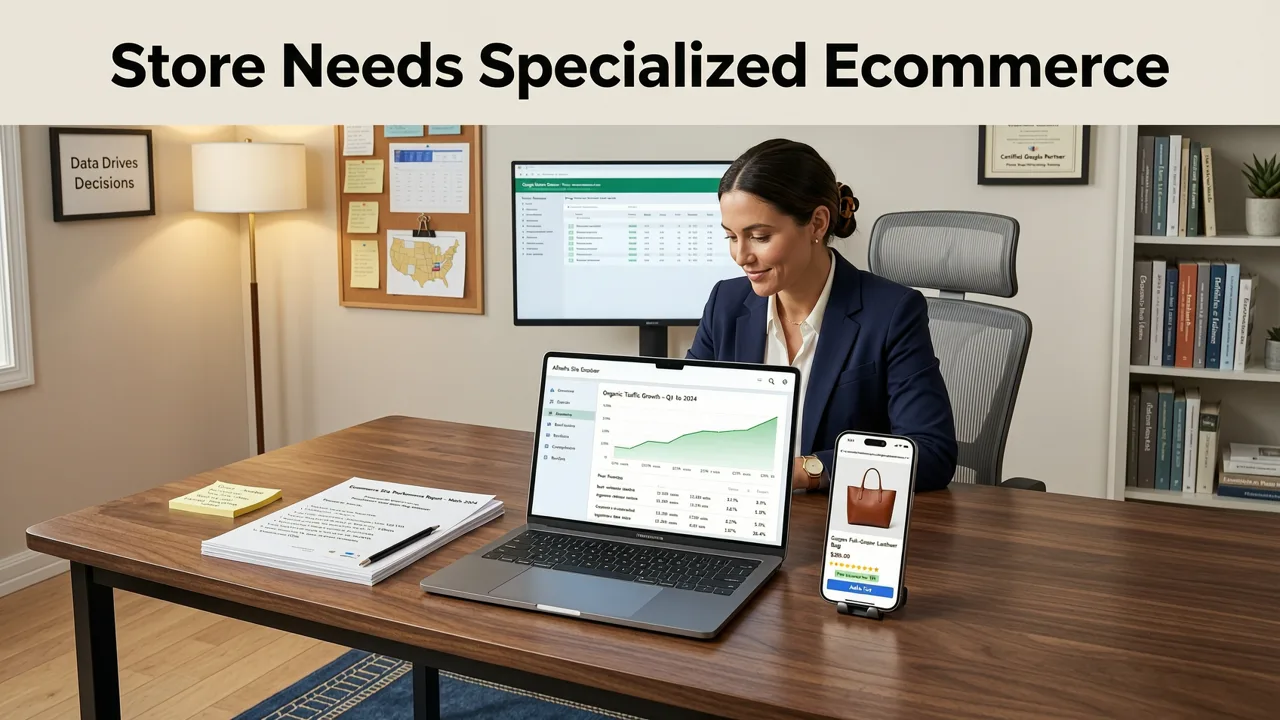
If you are still relying on basic keyword insertion and generic meta descriptions to rank your online store, you are already losing ground to competitors. The best ecommerce seo marketing agency in 2026 combines advanced technical site architecture, AI-driven content optimization, and deep semantic search alignment to drive sustainable organic revenue. Finding the right partner means looking beyond basic link building and focusing on how modern search engines actually understand, categorize, and rank complex product catalogs.
Ecommerce SEO is fundamentally different from standard informational SEO. A typical blog or service site might have a few hundred pages to optimize. An online store can have tens of thousands of product variations, complex faceted navigation, pagination issues, and dynamic inventory statuses. Managing crawl budget, ensuring indexability for high-margin categories, and preventing duplicate content across product variants require a highly specialized approach. When search engines struggle to parse your site architecture, your most profitable products remain invisible, regardless of how good your products actually are.
Core Services to Expect from an Ecommerce SEO Marketing Agency
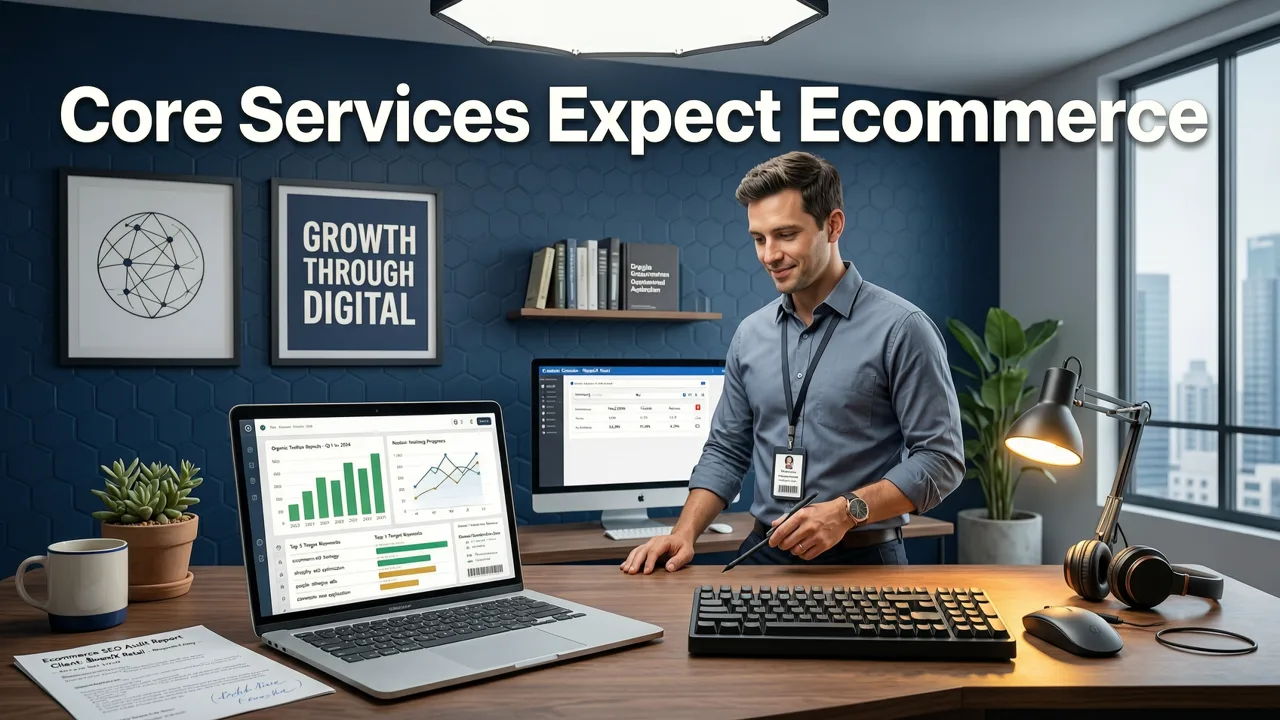
When evaluating a potential partner, you need to verify that their service offerings align with the technical and content realities of running an online store in 2026. A comprehensive strategy should cover three main pillars: technical foundation, semantic content architecture, and AI-enhanced optimization.
Advanced Technical SEO and Crawl Management
The foundation of any successful online store is its technical health. Search engines allocate a specific crawl budget to every domain. If your site wastes that budget on low-value faceted filters, out-of-stock product pages, or broken pagination loops, your core category pages will not get indexed properly. A top-tier agency will conduct rigorous crawl readiness assessments, manage JavaScript rendering issues, and implement strict indexability controls. For a deeper dive into the technical requirements, reviewing a comprehensive Technical SEO Checklist for 2026 can help you understand the baseline standards your agency should be meeting.
AI-Powered Product Page Optimization
Product pages are the primary conversion engines of your store, but they often suffer from thin content or manufacturer-duplicated descriptions. In 2026, search engines demand unique, helpful, and contextually rich content even on transactional pages. Leading agencies leverage advanced tools to rewrite and structure product descriptions, ensuring they answer user queries, highlight specifications naturally, and integrate semantic entities. Exploring dedicated AI Content Optimization Services is crucial for scaling this process across thousands of SKUs without sacrificing quality or topical relevance.
Semantic Topic Clustering and Category Architecture
Category and collection pages are the backbone of ecommerce SEO. They bridge the gap between broad search intent and specific product offerings. A skilled agency will restructure your category architecture using semantic topic clustering. This means grouping related products, subcategories, and informational buying guides into cohesive silos. This structure helps search engines understand the topical authority of your store while providing a logical, user-friendly navigation path that reduces bounce rates and increases add-to-cart conversions.
How to Evaluate an Ecommerce SEO Marketing Agency in 2026
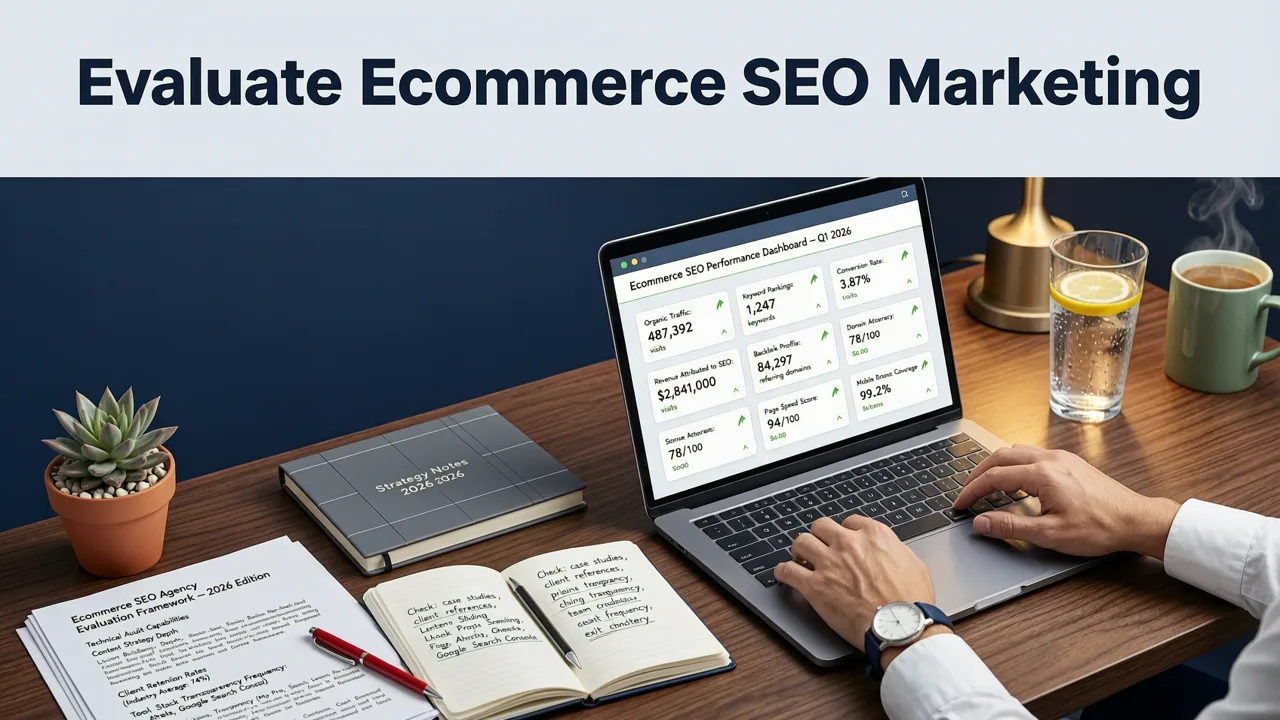
Choosing the right partner is a critical business decision. The market is saturated with agencies promising quick fixes, but sustainable organic growth requires a methodical, data-driven approach. Use the following comparison framework to separate specialized ecommerce experts from generalist firms.
| Evaluation Criteria | What to Expect from a Top Agency | Common Red Flags |
|---|---|---|
| Technical Audits | Deep dives into crawl budget, JavaScript rendering, faceted navigation, and schema markup. | Only checking basic meta tags, title lengths, and generic sitemap generation. |
| Content Strategy | Intent-first product pages, semantic category clustering, and AI-assisted scaling. | Mass-producing low-quality blog posts or duplicating manufacturer descriptions. |
| Reporting & KPIs | Focus on organic revenue, conversion rates, and category-level visibility. | Obsessing over vanity metrics like total backlinks or raw traffic without sales context. |
| Platform Expertise | Proven frameworks for Shopify, Magento, BigCommerce, or custom headless setups. | Applying a one-size-fits-all WordPress strategy to complex ecommerce platforms. |
When reviewing proposals, pay close attention to how the agency handles your specific platform constraints. An expert will immediately ask about your theme structure, app integrations, and how your inventory management system handles out-of-stock URLs. If they gloss over these technical details, they likely lack the specialized experience required for ecommerce.
The Role of AI in Modern Ecommerce SEO
Artificial intelligence has fundamentally shifted how content is created and optimized. However, the mere use of AI is not a differentiator; the application of AI is what matters. In 2026, search algorithms are highly adept at identifying low-effort, AI-generated spam. Therefore, an effective strategy must use AI to enhance human expertise, not replace it.
The most effective agencies use AI for semantic outline generation, identifying content gaps in your category pages, and ensuring E-E-A-T (Experience, Expertise, Authoritativeness, and Trustworthiness) signals are properly integrated. When evaluating an agency's content capabilities, it is helpful to understand what makes an AI content writer for SEO actually effective. The focus must always remain on search intent and semantic relevance, ensuring that every piece of content serves a clear purpose in the user journey.
Building a Sustainable Organic Growth Strategy
Long-term success in ecommerce SEO requires moving beyond transactional keywords and capturing users earlier in the buying cycle. This involves creating comprehensive buying guides, comparison pages, and problem-solving content that naturally funnels readers toward your product categories.
Keyword research is the starting point for this expansion. While premium enterprise tools are standard, understanding how to leverage alternative data sources can give your agency a unique edge in finding low-competition, high-intent queries. Discovering free keyword planner alternatives for SEO in 2026 can be a valuable tactic for uncovering niche search trends that your competitors might be ignoring.
Furthermore, aligning your strategy with official search engine guidelines is non-negotiable. Adhering to the Google Search Central documentation ensures your site remains compliant with algorithm updates. Additionally, implementing robust structured data is critical for ecommerce. Using the Schema.org structured data reference to mark up products, reviews, and FAQs helps you secure rich snippets in the search results, significantly improving your click-through rates.
Partnering for Long-Term Search Visibility
Selecting the right ecommerce seo marketing agency is about finding a partner who understands the intricate balance between technical precision, semantic content, and user experience. The landscape in 2026 rewards stores that provide genuine value, seamless navigation, and highly relevant product information.
If you are ready to elevate your search visibility and drive qualified organic traffic, RankOnPilot offers comprehensive solutions tailored to the unique demands of online retail. From advanced technical SEO and AI-powered content creation to strategic link building and local SEO, our approach is designed to generate sustainable, long-term business growth. Explore our full suite of digital marketing services to start building a dominant organic presence today.


