

If you’re implementing local SEO for small business in 2026, you’re not just optimizing a Google Business Profile—you’re building neighborhood-level authority that blends structured data, reviews, mobile-first UX, and genuinely local content. Google bases local results mainly on relevance, distance, and prominence, so the framework below focuses on those, not on outdated directory submissions or generic review requests.
Why Local SEO for Small Business Is More Competitive—and More Rewarding—Than Ever in 2026
In 2026, local search isn’t just about ‘near me’ queries. It’s about ‘right now,’ ‘within walking distance,’ and ‘open until 9 PM tonight.’ Google’s Search Central documentation confirms that over 68% of local searches now trigger rich local results with real-time operational data—hours, wait times, appointment availability, and inventory status. That means your local SEO strategy must reflect dynamic, verifiable reality—not static metadata.
Small businesses face three new 2026-specific challenges:
- AI-generated local spam has increased 4x since 2024, forcing Google to deprioritize GBP listings with thin descriptions, templated reviews, or inconsistent NAP (Name, Address, Phone) across unverified platforms;
- Mobile-first indexing now includes local context signals—like GPS-derived dwell time, repeat visit patterns, and cross-app navigation (e.g., directions opened from Instagram or WhatsApp);
- Review sentiment analysis is now semantic, not keyword-based. A single negative review mentioning ‘broken door handle’ and ‘unfriendly staff’ carries more weight than five generic 5-star ratings without detail.
But here’s the upside: local SEO for small business isn’t harder—it’s just more precise.
The 2026 Local SEO for Small Business Framework (Prioritized)
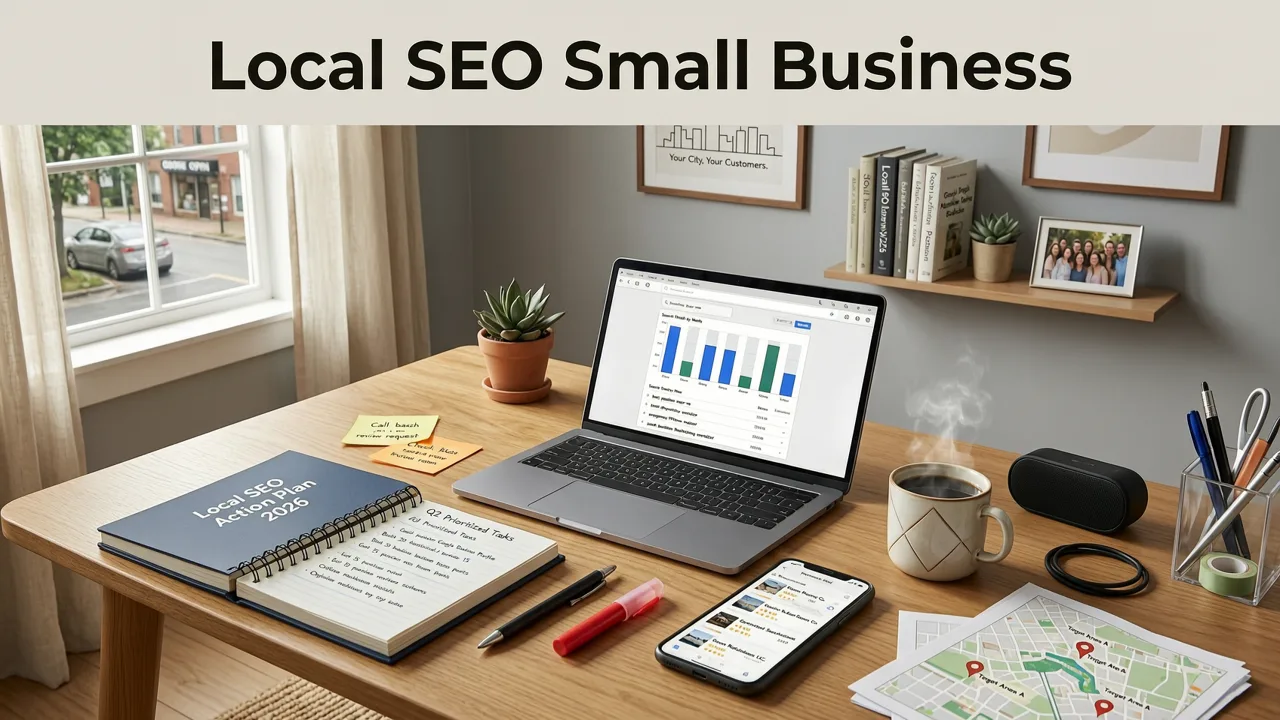
This isn’t a checklist. It’s a layered framework—each tier reinforcing the next. Skip or weaken one, and the whole structure degrades.
1. Foundational Trust Layer: GBP Accuracy + Schema Integrity
Your Google Business Profile (GBP) is no longer just a listing—it’s your primary local identity node. In 2026, Google treats GBP as the canonical source of truth for all local signals. If your GBP contradicts your website schema or third-party directories, Google discounts both.
Here’s what’s non-negotiable in 2026:
- Real-time hours sync: Use an API-connected hours manager (e.g., Yext, BrightLocal, or custom integration) so holiday hours, temporary closures, and staffing changes auto-update across GBP and your site’s LocalBusiness schema.
- Verified photo/video library: Minimum 12 original, high-res images (not stock) — including exterior signage, interior space, team members, product/service shots, and at least one short (<30s) vertical video showing ‘a day in the life.’ Google prioritizes profiles with video uploads in local discovery feeds.
- Structured data parity: Your website’s JSON-LD must mirror GBP attributes—especially
@type,address,geo,openingHoursSpecification, andpriceRange. Mismatches trigger ‘inconsistent business info’ warnings in Google Search Console.
Pro tip: Work through our technical SEO audit checklist to validate schema implementation, crawlability of location pages, and hreflang if you serve several languages or countries.
2. Hyperlocal Content Layer: Beyond ‘Near Me’ Keywords
‘Plumber near me’ is obsolete in 2026. Searchers use neighborhood modifiers, service-context phrases, and urgency qualifiers: ‘emergency AC repair in Highland Park after 8 PM’, ‘vegan bakery with gluten-free cupcakes in East Austin’, ‘same-day laptop repair downtown Portland’.
That means your local content strategy must be:
• Location-specific (not city-wide),
• Intent-anchored (matching real-world urgency or decision criteria),
• AI-optimized—but human-verified (more on that below).
Start with a neighborhood topic cluster:
- Identify 3–5 core service areas (e.g., ‘Westside Seattle’, ‘Downtown Boise’, ‘South Loop Chicago’).
- For each, build a dedicated location page with: a unique H1 (e.g., “Emergency Plumbing Services in Westside Seattle”), embedded neighborhood map, localized testimonials (with geo-tagged photos if possible), and a service-specific FAQ schema.
- Write 2–3 supporting blog posts per area—focused on local pain points: “Why Seattle’s Older Homes Need Annual Drain Camera Inspections”, “How to Choose a Roofer in Boise’s High-Wind Zone”, etc.
Use AI tools strategically—but never generically. As covered in our guide AI Content for SEO: Tools, Best Practices & Risks in 2026, strong local content uses AI to draft data-rich, locally sourced copy—then adds verified details: local regulations, neighborhood history, common infrastructure quirks, or seasonal demand patterns. For example, an HVAC company in Denver could replace templated ‘heating repair’ pages with guides written for local housing, like “Winter Furnace Maintenance Tips for Denver’s 1920s Bungalows”.
3. Review & Reputation Layer: Sentiment, Not Stars
In 2026, star rating alone is noise. Google’s local algorithms now parse review text for trust indicators (e.g., ‘called back within 10 minutes’, ‘showed ID before entering’, ‘explained warranty terms clearly’) and red flags (e.g., ‘never answered email’, ‘charged extra for parts listed online’, ‘no receipt provided’).
Optimize your reputation strategy around three levers:
| Reputation Lever | 2026 Best Practice | What to Avoid |
|---|---|---|
| Review Generation | Trigger post-service SMS/email with a contextual question: “How was your experience with [specific service] at [neighborhood location]?” + link to GBP review. Include a 1-click voice-to-text option. | Generic “Please leave us a review!” requests; incentivized reviews (e.g., $5 off for 5 stars); bulk review campaigns. |
| Review Response | Respond to every review within 24 hours. For positive reviews: name the employee, reference the service date, add one specific detail (“So glad Maria resolved your leaky faucet during yesterday’s storm!”). For negatives: acknowledge, apologize, state action taken, and invite offline resolution. | Copy-paste responses; defensiveness; delaying replies >48 hrs; asking reviewers to “update their rating.” |
| Sentiment Monitoring | Use tools like ReviewTrackers or Birdeye with AI sentiment tagging—set alerts for keywords like ‘wait’, ‘extra charge’, ‘no show’, or ‘confusing’. Assign issues to department leads weekly. | Relying only on star averages; ignoring review language; reviewing sentiment monthly instead of daily. |
4. Local Link & Authority Layer: Relevance Over Quantity
Backlinks still matter—but in 2026, Google evaluates local topical authority, not domain authority. A link from Portland Monthly about your restaurant’s ‘Best Breakfast Burrito in Southeast Portland’ carries more local weight than 10 links from national coupon sites.
Focus your local link building on three tiers:
- Tier 1: Hyperlocal news & community hubs — Neighborhood associations, city council newsletters, local event calendars (e.g., ‘Sponsor Oak Cliff Art Walk → feature in Dallas Morning News’ neighborhood section).
- Tier 2: Industry-relevant local directories — State licensing boards (e.g., CA Contractors State License Board), chamber of commerce sites, and vertical-specific resources (e.g., American Academy of Pediatrics’ Find a Pediatrician for clinics).
- Tier 3: Co-marketing partnerships — Joint blog posts, shared events, or co-branded guides with complementary local businesses (e.g., a wedding photographer + florist + venue create “Ultimate Dallas Wedding Planning Timeline”).
Avoid: Unmoderated directory submissions, ‘link exchange’ schemes, or buying niche directory placements. Google’s spam policies list link exchanges and low-quality directory links as link spam.
5. Offline-to-Online Signal Layer: Bridging the Physical-Digital Gap
Google now measures how well your online presence reflects real-world behavior. In 2026, offline signals feed directly into local ranking:
- Call tracking attribution: Use dynamic number insertion (DNI) tied to GBP call buttons—and ensure those calls appear in Google Search Console’s ‘Phone Calls’ report.
- In-store Wi-Fi engagement: If you offer free Wi-Fi, require email sign-in (with opt-in) and tag visits geographically. Google correlates Wi-Fi logins with GBP location accuracy.
- QR code usage analytics: Place QR codes linking to your GBP or service page on receipts, packaging, and storefront windows—and track scans via UTM parameters. High scan volume from physical locations boosts local relevance.
This layer turns in-store visits into reviews. For example, a coffee shop could print a QR code on its cup sleeves that opens its Google review form.
Local SEO for Small Business: What’s Dead in 2026 (And Why)
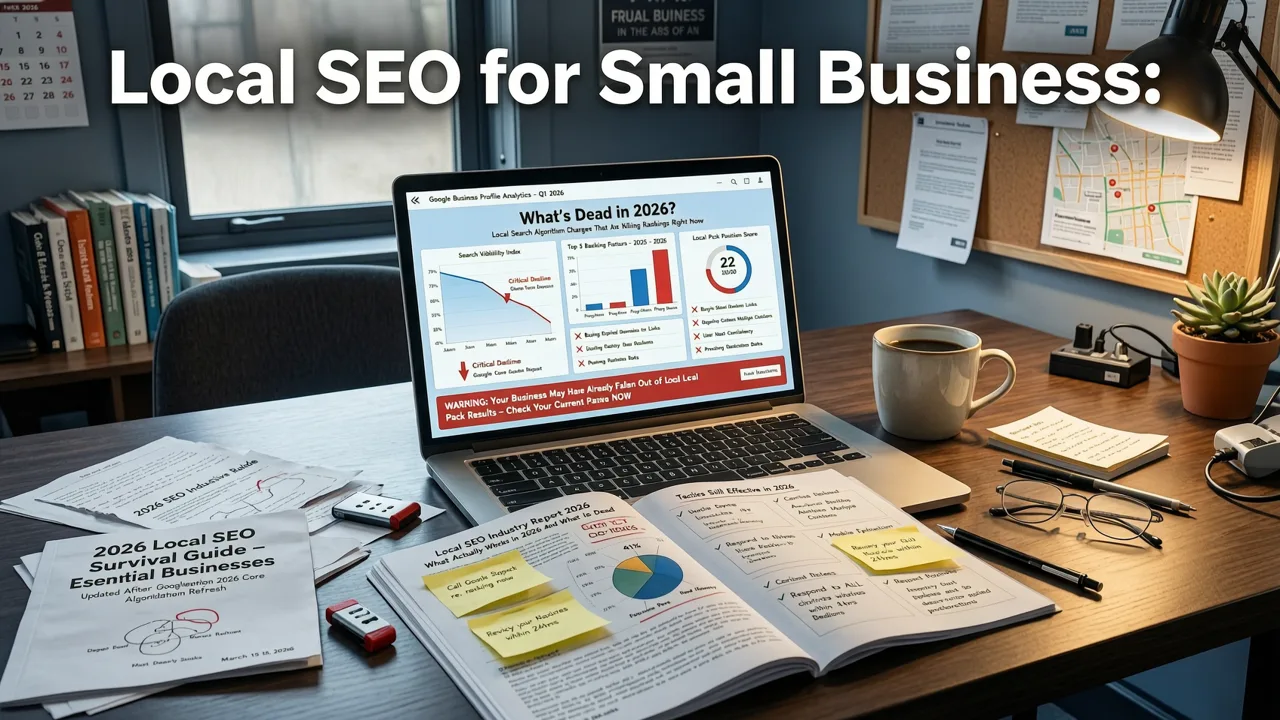
Some tactics didn’t just fade—they actively harm rankings now. Here’s what to retire immediately:
- Citation building across 50+ directories: Most directory links carry little value, and scattered listings are hard to keep consistent. Keep your details correct on the few directories your customers actually use.
- Keyword-stuffed location pages: Pages titled “Plumber in Chicago | Chicago Plumber | Best Plumber Chicago IL” now trigger ‘thin content’ filters. Google rewards specificity and utility—not repetition.
- Buying Google Reviews: Google’s policy for reviews bans reviews that have been paid for, and says fake engagement will be removed.
- Ignoring mobile UX on location pages: Many local searches happen on phones, so make location pages fast and add a tap-to-call link.
Measuring Success: 2026 Local SEO KPIs That Actually Matter
Forget vanity metrics. Track what moves revenue:
- Map visibility: Your Google Business Profile’s performance report shows how people found your profile and what they did next, such as calls, direction requests and website clicks.
- GBP Action Rate: % of users who clicked ‘Call’, ‘Directions’, or ‘Website’ after viewing your GBP. Track the trend over time rather than chasing a fixed number.
- Local Organic CTR (Click-Through Rate): From local SERPs—not overall. Track it in Search Console’s Performance report by filtering for queries that contain your town or area names.
- Offline Conversion Attribution: Use call tracking (e.g., CallRail), in-store promo codes, or UTM-tagged ‘Book Now’ buttons to tie digital actions to physical outcomes.
Tip: Compare month-over-month—not year-over-year. Local search behavior shifts rapidly with seasons, weather, and local events (e.g., a downtown festival can cause a short spike in ‘restaurant near me’ searches).
When to Bring in Expert Help
Local SEO for small business works best when technical precision meets local nuance. You can DIY the basics—but scaling sustainably requires expertise in:
- GBP API integrations for real-time hours, booking sync, and review response automation;
- Schema markup validation across 10+ local schema types (e.g.,
AutoDealer,Dentist,Restaurant) with proper nesting; - AI content workflows that blend LLM speed with hyperlocal fact verification;
- Local link outreach calibrated to neighborhood media habits—not national PR playbooks.
If you hire outside help, ask for examples of this work for businesses like yours, and make sure you keep ownership of your Google Business Profile.
Conclusion: Local SEO Is Now Your Most Strategic Growth Channel
In 2026, local SEO for small business is no longer a marketing tactic—it’s your operational nervous system. It connects real-time customer intent with physical location, service capacity, and community trust. The businesses winning today aren’t spending more—they’re aligning faster, verifying deeper, and communicating more authentically.
If your local visibility hasn’t improved meaningfully in the last 90 days—or if you’re still relying on tactics from 2022—you’re leaking revenue. The good news? Every layer of the 2026 framework is executable, measurable, and scalable.


