

How to Grow Organic Traffic in 2026: Proven Tactics That Work
If you’re asking how to grow organic traffic in 2026, you’re not chasing vanity metrics—you’re investing in long-term visibility, brand authority, and high-intent leads that convert. Unlike paid channels, organic search delivers compounding returns: a well-optimized page published today can rank—and drive qualified traffic—for years. But the rules have shifted dramatically since 2023. Google’s ranking systems are designed to prioritize “helpful, reliable information that’s created to benefit people”, and AI Overviews now answer many searches directly on the results page.
This guide breaks down how to grow organic traffic in 2026, with tactics aligned with Google Search Central’s guidance and with how people now search alongside AI answers.
Why Organic Traffic Growth Is Harder—and More Valuable—Than Ever in 2026
Organic traffic isn’t disappearing, but it is harder to earn. Google now surfaces three distinct layers of results:
- Traditional blue links (still critical—but now filtered for E-E-A-T signals)
- AI-generated answer panels (AI Overviews and AI Mode, which show links to the sources they draw on)
- “People Also Ask” and “Related Searches” expansions (driving deeper topic exploration and long-tail discovery)
This means growing organic traffic in 2026 isn’t about outranking one competitor—it’s about owning a topic ecosystem: answering questions before users ask them, structuring content for both humans and AI scrapers, and proving trustworthiness at every touchpoint.
The 2026 Organic Traffic Growth Framework
A 5-pillar framework keeps organic growth sustainable:
- Intent-First Topic Clustering (not keyword stuffing)
- E-E-A-T Amplification (experience, expertise, authoritativeness, trustworthiness)
- AI-Ready Technical Foundation (Core Web Vitals, structured data, crawl efficiency)
- Content That Wins in SGE & Traditional SERPs (semantic depth + human proof points)
- Strategic Authority Building (links, citations, and co-citation signals—not just DA/DR)
Let’s unpack each pillar with specific, executable steps.
1. Build Topic Clusters Around Searcher Intent—Not Just Keywords
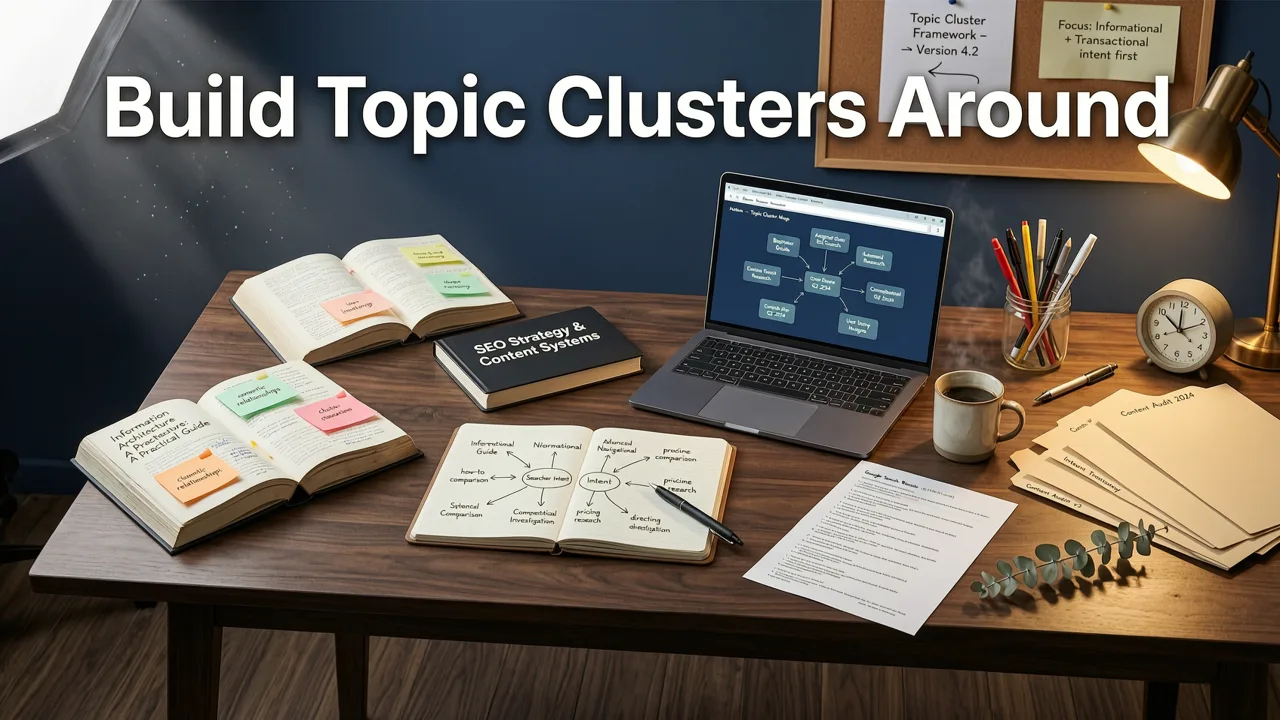
Keyword research in 2026 is no longer about volume or difficulty scores. It’s about mapping informational, commercial, and navigational intent across a user’s entire journey—from awareness (“what is [X]?”) to evaluation (“[Brand A] vs [Brand B]”) to conversion (“best [product] for [use case]”).
Here’s how we do it:
- Start with SGE-optimized seed queries: Use a keyword tool such as Semrush to identify queries already triggering AI answer panels. These reveal Google’s preferred answer structure (e.g., comparison tables, step-by-step guides, or definition + pros/cons).
- Map semantic relationships: Instead of targeting “SEO tools,” cluster around “best SEO tools for small business in 2026,” “free SEO audit tools with reporting,” and “SEO tools that integrate with GA4 and GSC.” These aren’t synonyms—they’re distinct intents requiring unique content architecture.
- Validate with real user data: In Google Search Console (GSC), open Performance > Queries and look for queries with many impressions but a low click-through rate. They show topics where you already appear but don’t yet give searchers what they want.
Pro tip: If you have a dozen isolated posts on one subject, consider combining them into one comprehensive topic hub (e.g., “HR Tech Stack Optimization”) with a few supporting cluster pages (“How to Audit Your ATS Integration,” “Top 5 HR Analytics Tools for Mid-Market,” “GDPR-Compliant HR Software Checklist”), all linked together.
2. Prioritize E-E-A-T—Especially Experience and Real-World Proof
Google’s guidance on helpful content describes E-E-A-T (experience, expertise, authoritativeness and trustworthiness) and says: “Of these aspects, trust is most important.” Showing first-hand experience and real results is one of the clearest ways to earn that trust.
To strengthen E-E-A-T:
- Add author schema (
Personmarkup withsameAs,jobTitle, andalumniOf) to every bylined article - Embed video testimonials (not stock footage) showing real customers using your product/service
- Link to primary sources—e.g., cite clinical studies instead of secondary summaries, link to government datasets (data.gov), or embed interactive charts from official APIs
For local service businesses, this means adding LocalBusiness schema with areaServed, serviceArea, and review markup—including star ratings pulled dynamically from Google Business Profile.
3. Optimize for Core Web Vitals—and Beyond
Core Web Vitals (CWV) still matter in 2026. Google measures three:
- Interaction to Next Paint (INP) (replacing FID)—measuring responsiveness during all user interactions, not just first click
- Cumulative Layout Shift (CLS)—how much the layout moves unexpectedly while the page loads and is used
- Largest Contentful Paint (LCP)—how quickly the largest visible element, usually the main image or text block, loads
Mobile INP is often the hardest to pass, especially on dynamic, JavaScript-heavy sites. To grow organic traffic in 2026, technical SEO must go beyond “green CWV badges.”
Key actions:
- Adopt partial hydration: Load critical HTML/CSS first, then hydrate interactive components only when scrolled into view (e.g., pricing calculators, configurators)
- Preload LCP images with
fetchpriority=highand use AVIF/WebP with responsive<picture>elements - Implement
loading=lazy+decoding=asyncon all offscreen media - Use
rel=preconnectfor critical third-party origins (e.g., analytics, CDNs, fonts)
4. Create Content That Wins in Both SGE and Traditional SERPs
AI-generated answers don’t replace traditional rankings—they compete for attention. Google says there are no extra requirements to appear in AI Overviews and AI Mode: the same SEO best practices apply as for regular results.
So how do you grow organic traffic in 2026 with content that satisfies both?
Structure for Dual Discovery
Every high-priority page should include:
- Concise, scannable TL;DR section (under 120 words) at the top—optimized for SGE extraction
- Structured data markup: Use
FAQPage,HowTo, andArticleschemas with precisemainEntitydefinitions - Answer-first headings: H2s like “How to Reset Your Shopify Password (Step-by-Step)” instead of “Password Recovery Guide”
- Embedded, self-contained assets: Interactive calculators, downloadable checklists (with
DownloadActionschema), and annotated screenshots
Example: For a page targeting “how to grow organic traffic 2026,” we’d open with a bullet-point summary of the 5-pillar framework, then expand each pillar with subheadings, data-backed insights, and embedded tools (e.g., a free “Topic Cluster Builder” spreadsheet).
5. Build Authority Through Contextual Links—Not Just Quantity
Backlinks still matter in 2026—but Google now weighs co-citation context and topical relevance more heavily than ever. A link from a .gov site about cybersecurity carries far more weight for a password security tool than a high-DA link from an unrelated fashion blog.
A sound link-building strategy focuses on three tiers:
| Link Tier | Goal | 2026 Tactics | Timeframe |
|---|---|---|---|
| Foundation Links | Verify legitimacy & local presence | Google Business Profile, Bing Places, Apple Maps, Chamber of Commerce, BBB, industry associations | Weeks 1–4 |
| Contextual Links | Signal topical authority | Guest contributions to niche newsletters (e.g., “SEO for Ecommerce” in Shopify Compass), expert roundups in trade pubs (e.g., “2026 Local SEO Trends” in Localogy), data citations in analyst reports | Months 2–6 |
| Amplification Links | Drive referral + reinforce trust | Podcast interviews with show notes linking to deep-dive resources, contributor bios on high-DA platforms (e.g., HubSpot Academy, Moz), earned media placements with embedded assets | Months 4–12 |
Note: We avoid directory submissions, PBNs, and automated outreach. Google’s spam policies treat buying links, link exchanges and automated link building as link spam.
What’s Not Working in 2026 (And Why)
Some once-effective tactics now harm growth—or waste resources:
- Thin “listicle” content: Pages like “10 Best SEO Tools” without comparative analysis, pricing transparency, or real-world testing add little that readers can’t find elsewhere.
- Automated internal linking plugins: Over-linking dilutes topical focus and confuses crawlers. Manual, intent-aligned internal links are more useful to readers.
- Blog-only content strategies: Standalone articles without pillar pages, topic clusters, or strategic interlinking struggle to build topical authority.
- Ignoring GA4 + GSC integration: Without event-based tracking (e.g., “content_engagement,” “video_complete”), you can’t prove content utility to Google—or measure true ROI.
Measuring Success: Key Organic Traffic Metrics in 2026
Don’t track “organic sessions” alone. Here’s what actually moves the needle:
- Topical Coverage Score: % of priority topic clusters with ≥3 supporting pages ranking in top 20
- AI Overview visibility: % of target queries where your domain is cited in Google’s AI Overviews (tracked by manual sampling or a rank tracker that reports AI Overviews)
- E-E-A-T Signal Strength: # of author bios with verified credentials + # of cited primary sources per 10K words
- Core Web Vitals pass rate: % of page views with “good” LCP, INP and CLS (from the Chrome UX Report or Search Console)
- Authority Referral Rate: % of referring domains that are topically relevant (e.g., marketing, SaaS, or industry-specific)
Report these monthly—not as vanity stats, but as diagnostic levers. When Topical Coverage Score drops, audit content gaps. When AI Overview visibility stalls, refine your schema and summary sections.
Getting Started: Your 30-Day Organic Traffic Growth Plan
You don’t need a six-figure budget or a 10-person team. Here’s how to begin growing organic traffic in 2026—even with limited resources:
- Week 1: Audit & Prioritize
Run a GSC + GA4 combo audit. Identify your top 10 impression-driving, low-CTR queries. Map them to topic clusters. Pick 1–2 to optimize first. - Week 2: Fix Foundations
Check your Core Web Vitals in Search Console. Add author and FAQ schema to priority pages. Ensure mobile UX meets INP thresholds. - Week 3: Deepen & Differentiate
Expand thin pages with original data, customer quotes, and step-by-step visuals. Replace generic claims with verifiable outcomes (“cut load time by 1.8s” vs “fast loading”). - Week 4: Amplify & Attribute
Repurpose one pillar page into a LinkedIn carousel, a short YouTube explainer, and a newsletter deep-dive—each linking back to the source. Track referral paths in GA4.
Conclusion: Organic Traffic Growth Is a System, Not a Tactic
Learning how to grow organic traffic in 2026 means abandoning siloed thinking. It’s not “better keywords” or “more backlinks”—it’s aligning technical infrastructure, content architecture, E-E-A-T signals, and authority development into one coherent system. The winners aren’t those who chase algorithm updates—they’re the ones who build for people first, structure for machines second, and measure what truly matters.


