

Why the Best AI Keyword Planner Matters in 2026

If you’re searching for the best AI keyword planner in 2026, you’re not just looking for a tool that spits out a static list of high-volume terms. You need a platform that understands search intent, clusters topics semantically, and predicts algorithmic shifts before they happen. The landscape of search has fundamentally changed. With AI-driven search interfaces and complex ranking algorithms, traditional exact-match keyword research is no longer enough.
The best AI keyword planner must bridge the gap between raw data and human intent, helping you build topical authority rather than just chasing fleeting search trends. This guide breaks down the top AI-powered keyword research tools available this year, what features actually matter, and how to choose the right platform to scale your organic growth.
What Defines the Best AI Keyword Planner in 2026?
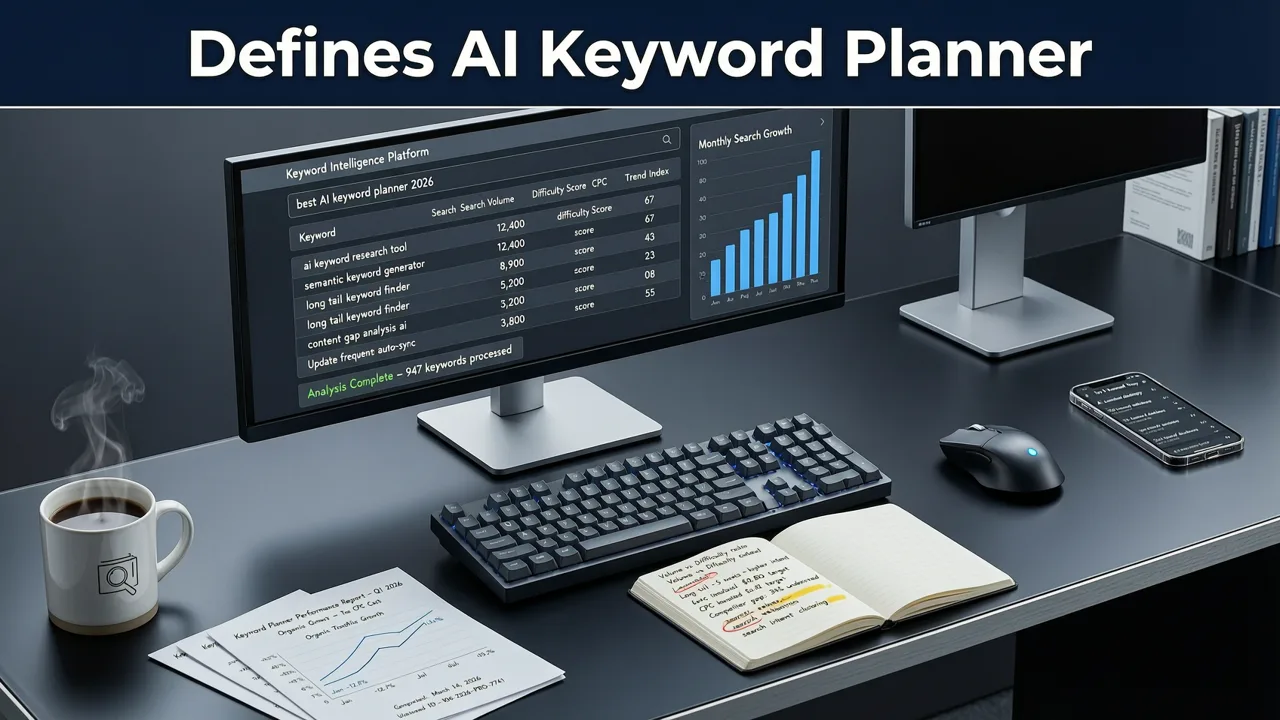
Evaluating keyword tools today requires looking past basic search volume metrics. Modern search engines prioritize context, user intent, and entity recognition. A truly effective AI keyword planner must offer the following capabilities:
- Intent Clustering: Grouping keywords by the underlying user goal rather than just string similarity, ensuring you build comprehensive topic clusters.
- Predictive Search Volume: Using machine learning to forecast traffic potential based on emerging trends, seasonal shifts, and algorithmic updates.
- SERP Feature Analysis: Identifying which keywords trigger AI-generated overviews, featured snippets, or video carousels, allowing you to tailor your content format.
- Entity Mapping: Connecting your target terms to broader knowledge graph entities, which is critical for aligning with Google Search Central guidelines on semantic understanding.
When a tool combines these features, it stops being a simple data scraper and becomes a strategic engine for organic visibility.
Top AI Keyword Planners Compared for 2026

The market is saturated with platforms claiming to use artificial intelligence. To separate the genuinely useful tools from the marketing hype, we evaluated the leading platforms based on their AI architecture, data accuracy, and practical utility for modern SEO workflows.
1. Keyword Insights
Keyword Insights has carved out a strong position by focusing entirely on AI-driven intent clustering. Instead of forcing you to manually sort thousands of keywords, its machine learning model analyzes the top search results for each term and groups them by actual search intent. This is particularly valuable for building siloed content architectures and avoiding keyword cannibalization. The platform excels at identifying the exact content format required to rank, whether that is a comprehensive guide, a product page, or a localized landing page.
2. Semrush with AI Integrations
Semrush remains a heavyweight in the SEO space, and its recent AI integrations have significantly upgraded its Keyword Magic Tool. The platform now uses AI to suggest semantic variations, identify content gaps, and predict the difficulty of ranking for specific clusters. While it is a comprehensive suite rather than a standalone keyword planner, its AI-enhanced filtering and intent tagging make it a top choice for agencies and enterprise teams managing large-scale content operations.
3. Ahrefs AI Keyword Generator
Ahrefs has introduced AI-powered features that help marketers brainstorm and expand keyword lists based on natural language prompts. By simply describing your target audience and business goals, the AI generates highly relevant, long-tail keyword variations that traditional tools might miss. Combined with Ahrefs' robust SERP checking and click-stream data, this tool is ideal for uncovering low-competition opportunities in mature niches.
4. Surfer SEO
While primarily known as a content optimization platform, Surfer SEO’s keyword research capabilities are deeply integrated with AI. Its Keyword Surfer tool analyzes the semantic relationships between terms and suggests secondary keywords that naturally belong in your content. This ensures that your on-page optimization is aligned with natural language processing (NLP) models, helping you capture a wider range of related queries without keyword stuffing.
Feature and Pricing Comparison Table
Choosing the right platform often comes down to your specific workflow needs and budget. Here is a practical comparison of the top AI keyword planners for 2026.
| Platform | Core AI Feature | Best For | Starting Price (Approx.) |
|---|---|---|---|
| Keyword Insights | Automated Intent Clustering | Content Strategists & Agencies | $58/month |
| Semrush | AI-Enhanced Keyword Magic Tool | Enterprise & Full-Service SEO | $139/month |
| Ahrefs | Prompt-Based Keyword Generation | Link Builders & Niche Marketers | $129/month |
| Surfer SEO | Semantic Keyword Mapping | On-Page Optimization & Writing | $105/month |
How to Choose the Right AI Tool for Your Business
The best AI keyword planner is the one that aligns with your business model and operational capacity. A tool that works perfectly for a high-traffic ecommerce brand might be overkill for a local service provider.
For Ecommerce Brands
Ecommerce SEO requires mapping keywords to specific product categories, filters, and buyer journey stages. Look for a tool that excels at commercial intent classification and can handle massive product catalogs. Platforms with strong AI filtering for transactional modifiers will help you prioritize pages that drive revenue rather than just informational traffic.
For SaaS and B2B Companies
B2B search behavior is highly nuanced, often involving long research cycles and complex problem-solving queries. Your keyword planner needs to identify bottom-of-funnel terms and map them to specific pain points. Tools that offer strong competitor gap analysis and AI-driven content briefs are essential here, ensuring your content addresses the specific technical concerns of your buyers.
For Local Businesses
Local SEO relies heavily on geo-modified queries and localized intent. While many AI tools focus on global search data, you need a platform that accurately reflects local search behaviors, including near-me variations and service-specific modifiers. Ensure the tool you choose provides reliable local search volume data and integrates well with local schema strategies, referencing standards from Schema.org to enhance your local visibility.
Integrating AI Keyword Data into Your SEO Workflow
Having the best AI keyword planner is only the first step. The real value comes from how effectively you integrate that data into your broader content and technical strategy. AI-generated insights are useless if they sit in a spreadsheet and never make it to your publishing pipeline.
From Research to Content Creation
Once your AI tool has clustered your keywords and identified the search intent, the next phase is content production. However, feeding raw keyword data into an AI writer often results in unnatural, poorly structured copy. Before you start generating drafts, review the guidelines on what makes an SEO-friendly AI content generator truly effective. You need a system that respects E-E-A-T principles and uses your keyword clusters as a structural foundation, not just a list of terms to insert.
Building a Resilient Organic Strategy
Keyword research should never exist in a vacuum. It must be part of a broader, adaptive strategy. If you are looking to translate your new keyword insights into measurable growth, consider adopting a structured approach like the framework outlined in our guide on how to increase organic search traffic with a 90-day plan. This ensures that your technical foundations are solid before you start publishing content targeting your newly discovered AI keyword clusters.
Measuring the Impact
Finally, you need to verify that your new content is actually capturing the traffic you predicted. Modern analytics require a shift away from legacy reporting. Learn how to properly isolate and analyze your results by exploring the Google Analytics 4 organic traffic report. By connecting your AI keyword research to precise GA4 reporting, you can continuously refine your strategy and double down on the clusters that deliver the highest quality leads.
Final Thoughts on AI-Powered Keyword Research
The era of manual, spreadsheet-based keyword research is over. The best AI keyword planner in 2026 is one that acts as a strategic partner, helping you navigate the complexities of semantic search, intent clustering, and AI-driven SERPs. By choosing a tool that aligns with your specific business needs and integrating its insights into a holistic SEO workflow, you can build a resilient organic presence that adapts to algorithmic changes and consistently drives qualified traffic.
Ready to elevate your organic strategy? RankOnPilot specializes in technical SEO, AI-powered content creation, and sustainable growth frameworks. Explore our services to build a search presence that converts.


