

Why a Keyword Planner for Content Strategy is Essential in 2026
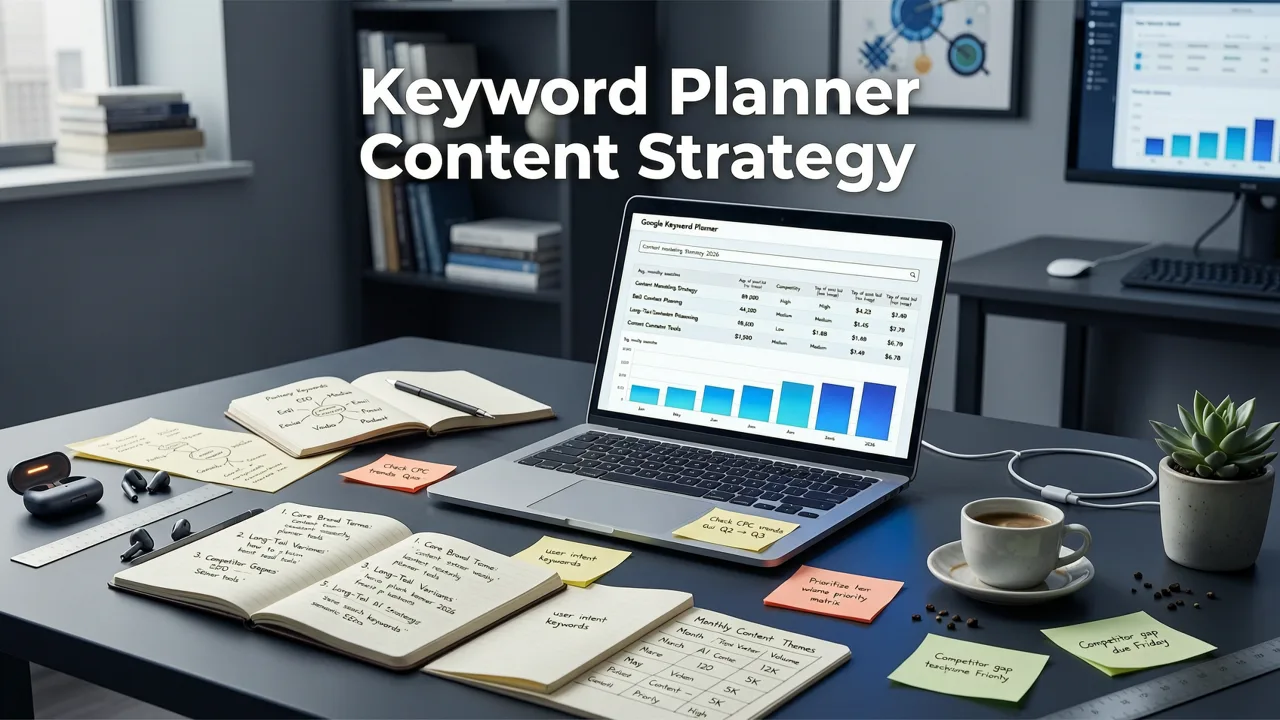
If you are searching for how to effectively use a keyword planner for content strategy in 2026, you are not looking for outdated Pay-Per-Click (PPC) tutorials or basic volume-chasing tactics. You are asking how to translate raw search data into a resilient, intent-driven editorial calendar that ranks, retains readers, and converts. In the current search landscape, a keyword planner is no longer just an ad-buying tool; it is the foundational engine for building topical authority and aligning your content with user expectations.
Search engines have evolved far beyond simple string matching. With the integration of AI-driven search experiences and stricter E-E-A-T (Experience, Expertise, Authoritativeness, and Trustworthiness) requirements, guessing what your audience wants is no longer a viable strategy. A robust keyword planning process bridges the gap between what users are asking and how your brand can provide the most comprehensive, trustworthy answer.
How to Use a Keyword Planner for Content Strategy: The 2026 Framework
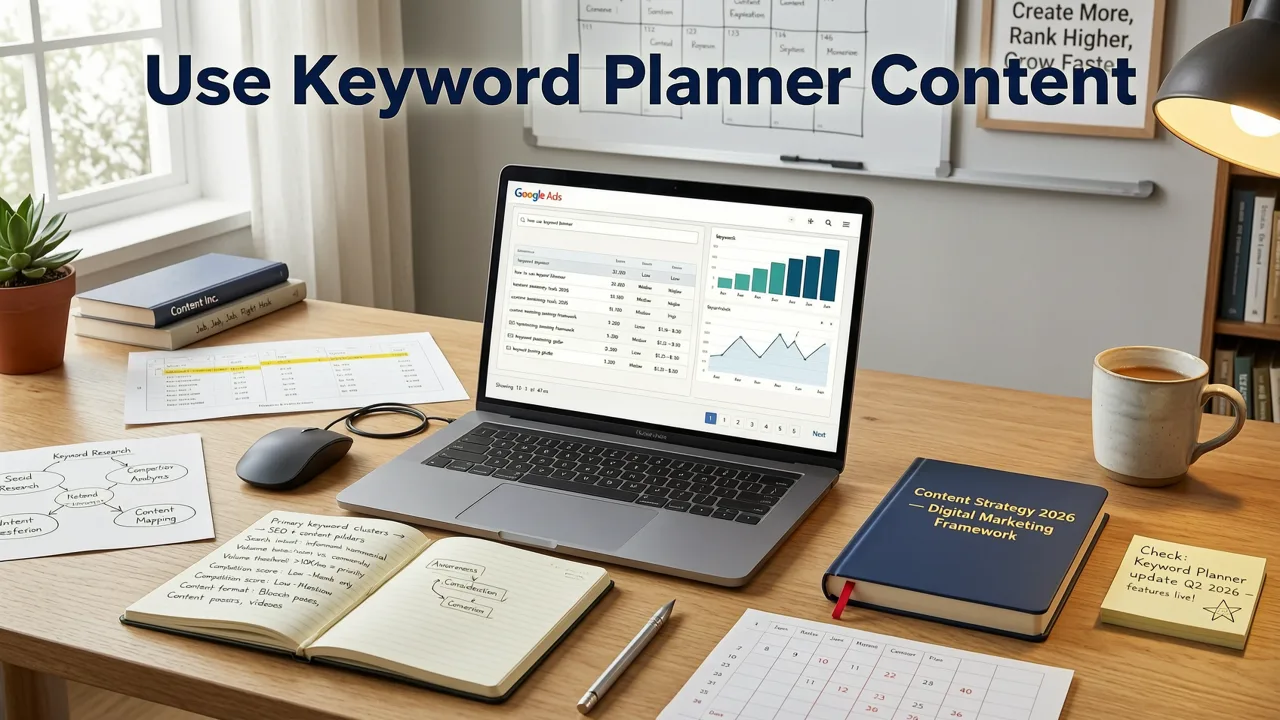
Building a content strategy requires moving away from isolated keyword targeting and toward holistic topic architecture. Here is how to structure your approach using modern keyword planning tools.
1. Define Your Core Topics and Seed Keywords
Before opening any tool, define the core problems your business solves. Enter these broad concepts into your keyword planner to generate seed keywords. Instead of focusing on high-volume, hyper-competitive terms immediately, look for the foundational topics that define your niche. These will become your pillar pages.
2. Map Search Intent to the Buyer Journey
Every keyword carries an implicit intent. In 2026, mapping this intent to your buyer journey is critical. Categorize your exported keyword lists into four primary buckets:
- Informational: Users seeking answers or education (e.g., 'what is topical authority').
- Navigational: Users looking for a specific brand or page (e.g., 'RankOnPilot blog').
- Commercial Investigation: Users comparing options before a decision (e.g., 'best SEO agency for startups').
- Transactional: Users ready to purchase or hire (e.g., 'hire technical SEO consultant').
Align your content formats to these intents. Informational queries require deep-dive guides, while transactional queries demand clear service pages with strong calls to action. Always align your content architecture with the latest guidelines from Google Search Central documentation to ensure your intent mapping matches algorithmic expectations.
3. Build Topic Clusters and Pillar Pages
A keyword planner for content strategy should output a web of related terms, not a flat list. Use the 'related searches' and 'semantic variations' features in your tool to build topic clusters. Your pillar page targets the broad head term, while the cluster pages target specific, long-tail variations. Internal linking connects these pages, passing equity and signaling topical depth to search engines.
Evaluating Keyword Metrics Beyond Search Volume
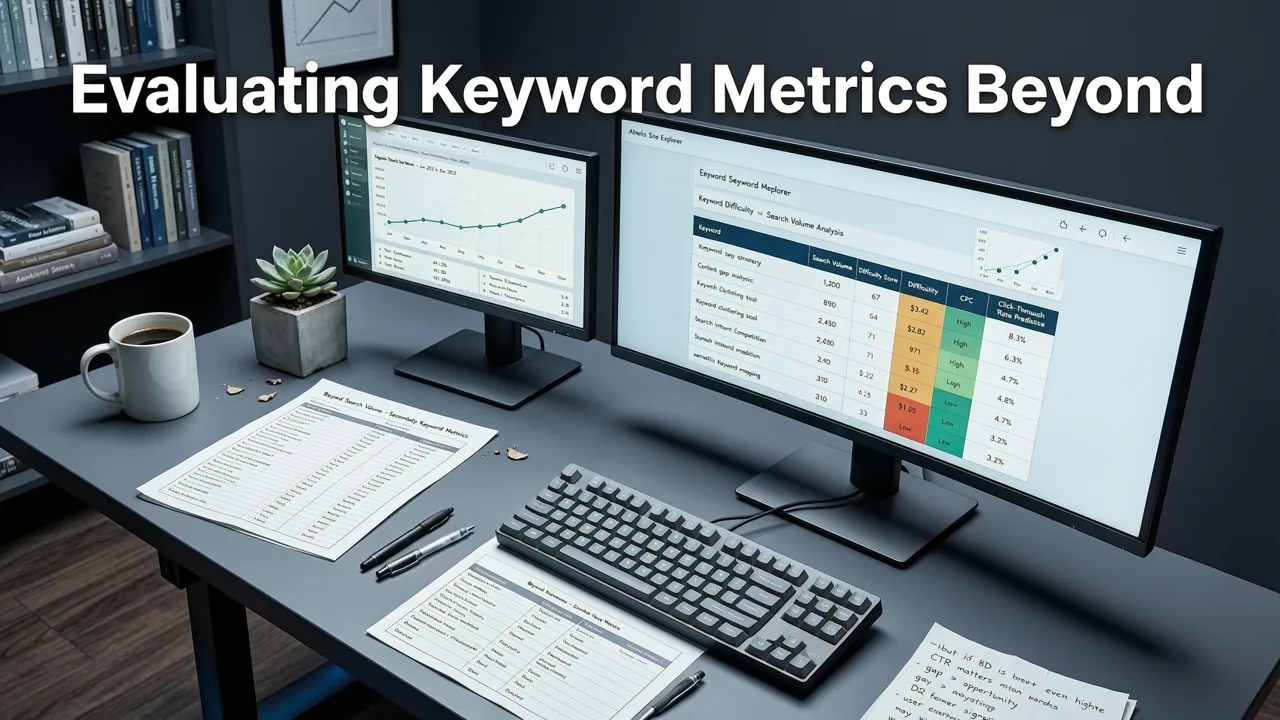
Many marketers make the mistake of prioritizing search volume above all else. In reality, a keyword with 200 monthly searches and high commercial intent will often outperform a generic term with 5,000 searches. When evaluating data from your keyword planner, shift your perspective from PPC metrics to organic content metrics.
| Metric | Traditional PPC Focus | Content Strategy Focus |
|---|---|---|
| Search Volume | Maximize reach for ad spend | Identify core pillar topics vs. long-tail clusters |
| Keyword Difficulty | Assess ad auction competition | Estimate time and link equity needed to rank organically |
| Cost-Per-Click (CPC) | Calculate ad budget requirements | Indicator of commercial intent and lead value |
| Search Intent | Optimize landing page for conversions | Map content format (guide, tool, product page) to user need |
Notice how CPC is utilized in the content strategy column. A high CPC indicates that advertisers are willing to pay a premium for clicks on that term, which usually correlates with high commercial or transactional intent. This makes it a highly valuable keyword to target organically, even if the raw search volume is modest.
Integrating Keyword Data with AI and E-E-A-T Principles
In 2026, keyword data must be paired with rigorous E-E-A-T standards. Search engines heavily favor content that demonstrates first-hand experience and deep expertise. Your keyword planner will tell you what users are searching for, but it will not write the content for you.
When you are ready to scale your output without sacrificing quality, understanding how to leverage an SEO-friendly AI content generator becomes critical for maintaining E-E-A-T standards. AI can help structure drafts based on your keyword clusters, but human oversight is required to inject real-world experience, original insights, and authoritative context.
Furthermore, enhance your content's visibility in AI overviews and standard results by implementing structured data. Referencing the Schema.org reference allows you to markup your articles, FAQs, and how-to guides, giving search engines explicit context about your content's purpose and structure.
Avoiding Common Keyword Planning Pitfalls
Even with the right tools, content strategies can falter if foundational mistakes are made. Avoid these common traps when using your keyword planner:
- Ignoring Zero-Click Searches: Many informational queries are answered directly in the search results. If a keyword has high volume but low click-through potential, consider targeting it only as a supporting cluster page rather than a primary pillar.
- Cannibalization: Targeting the exact same keyword across multiple pages confuses search engines and splits your ranking potential. Use your planner to ensure each page has a distinct primary keyword.
- Neglecting Content Decay: Keyword trends shift. Set a schedule to revisit your keyword planner every quarter to identify emerging terms and update decaying content.
Measuring the Impact of Your Keyword-Driven Content
A keyword strategy is only as good as its measurable outcomes. Once your content is published, you must track how well it captures the intended traffic and drives business goals.
Learning how to find organic search traffic in Google Analytics ensures you can measure the true ROI of your keyword strategy. By isolating organic traffic, you can see exactly which topic clusters are driving users to your site. From there, analyze conversion rates to determine if your commercial and transactional keywords are actually generating qualified leads.
To see how these strategies fit into a broader, actionable timeline, explore our guide on how to increase organic search traffic using a structured 90-day plan.
Conclusion
Using a keyword planner for content strategy in 2026 requires a shift from simple volume tracking to deep intent mapping and topical architecture. By aligning your keyword data with E-E-A-T principles, structuring comprehensive topic clusters, and rigorously measuring your outcomes, you can build a resilient organic presence that withstands algorithm updates and drives sustainable growth.
If you need expert assistance in translating your keyword research into a high-performing, technically sound content strategy, the team at RankOnPilot can help. Explore our comprehensive SEO and digital marketing services to start building your organic growth engine today.


